
Last updated October 31, 2026
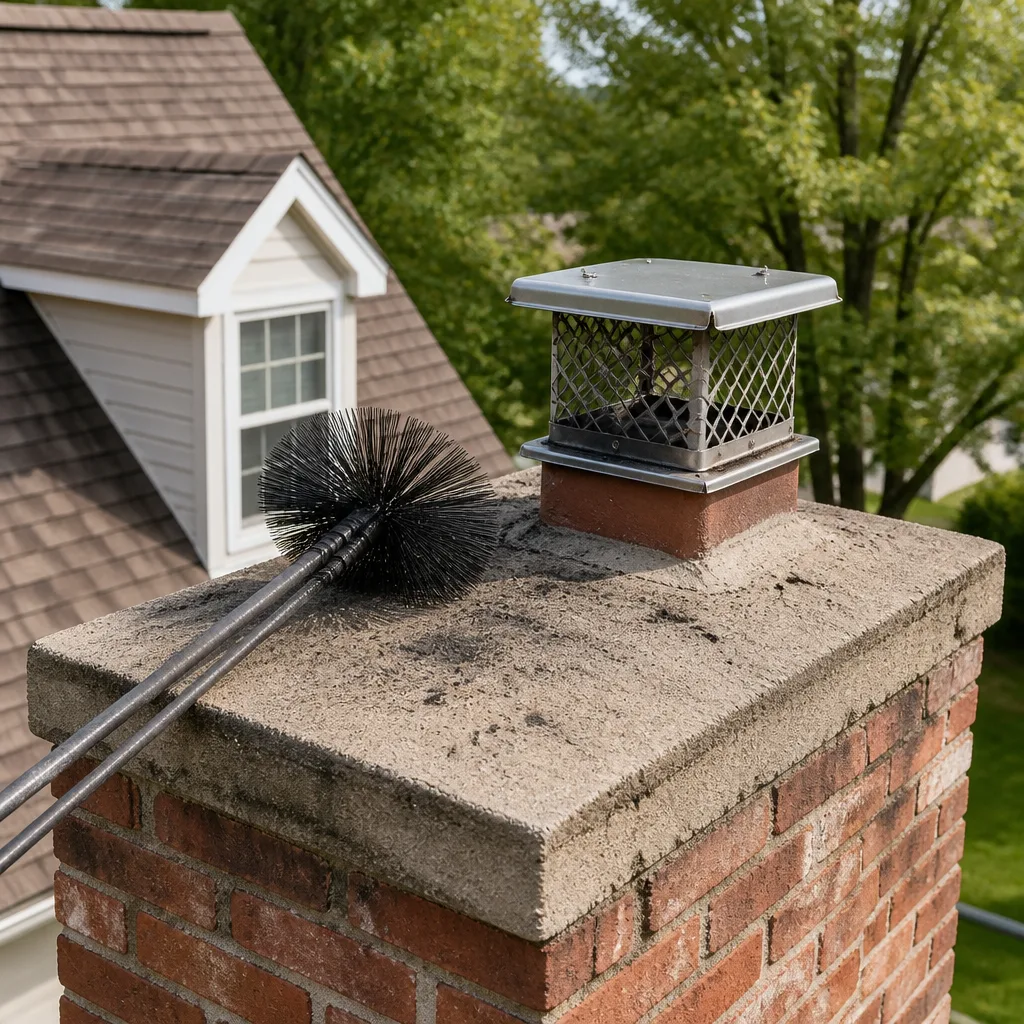 Sweep & inspection
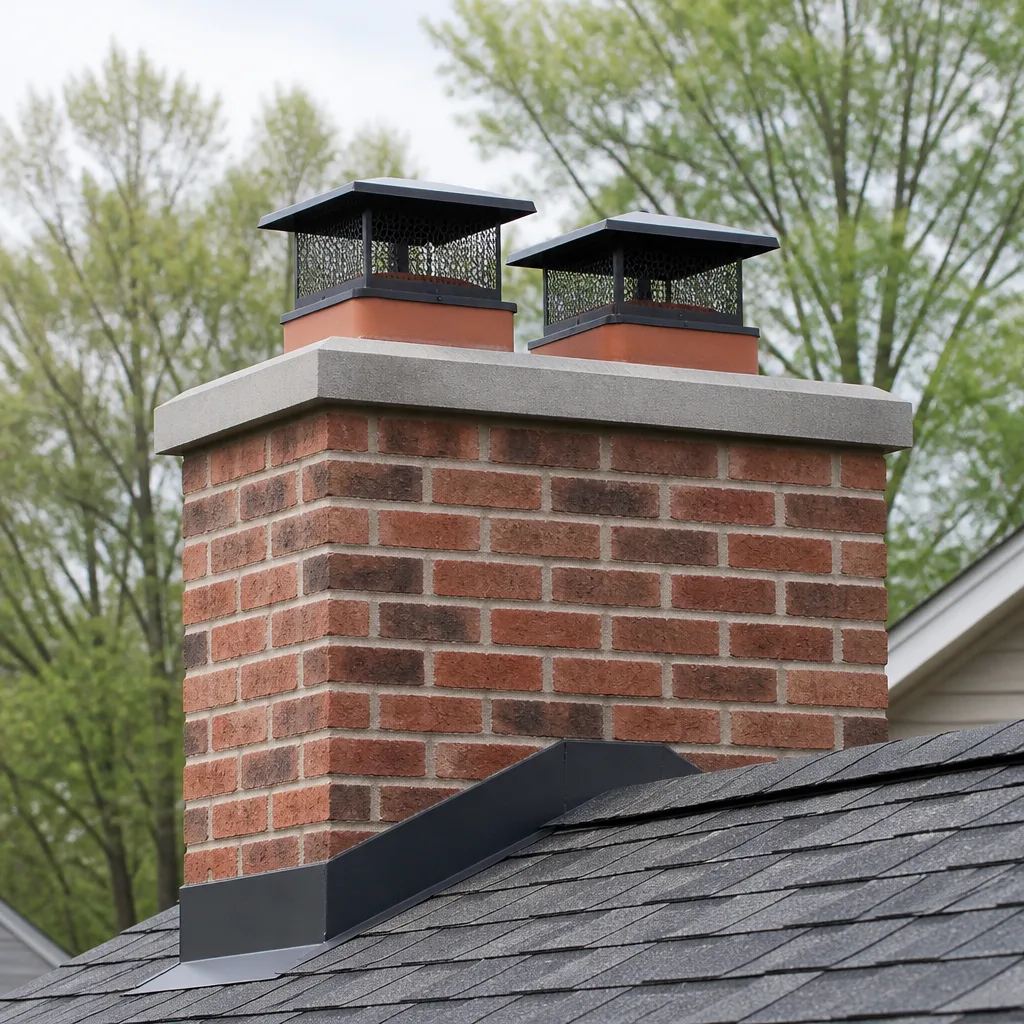 Caps & crowns
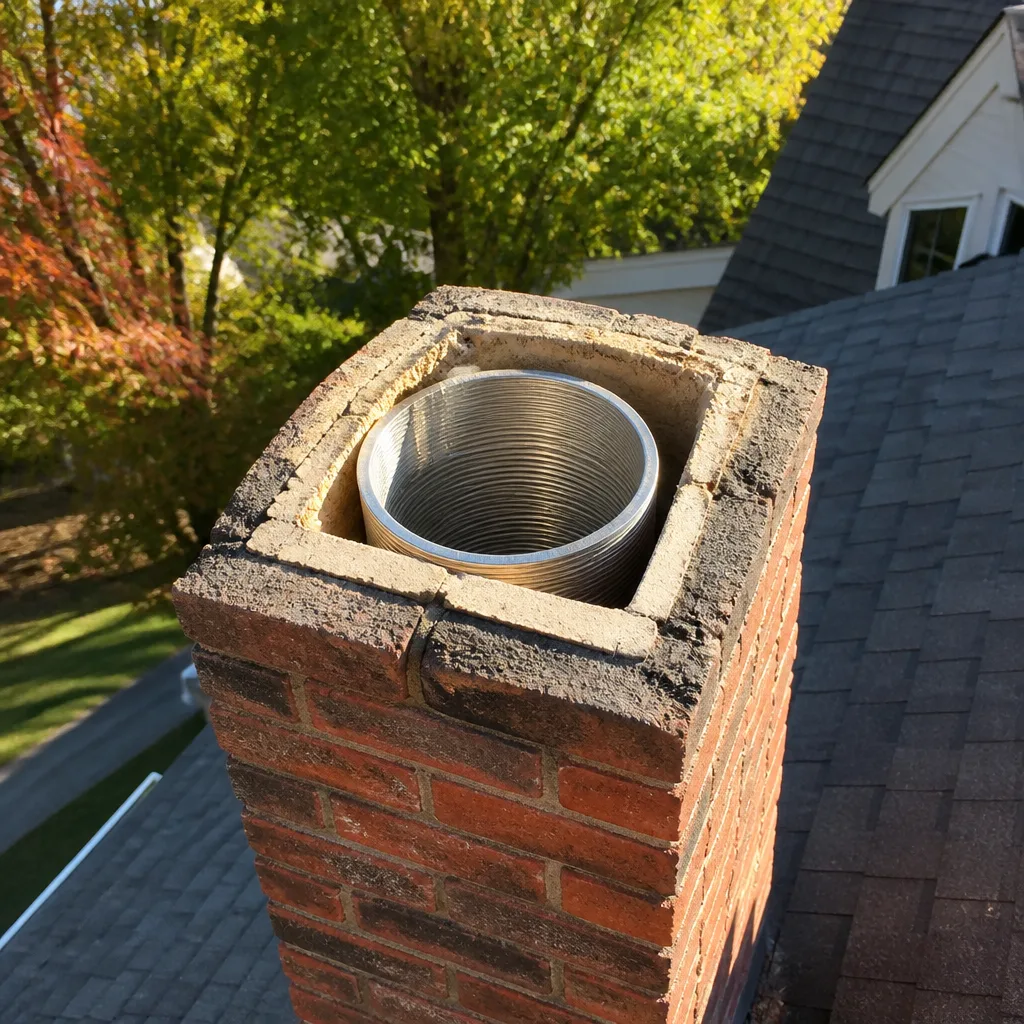 Flue relining
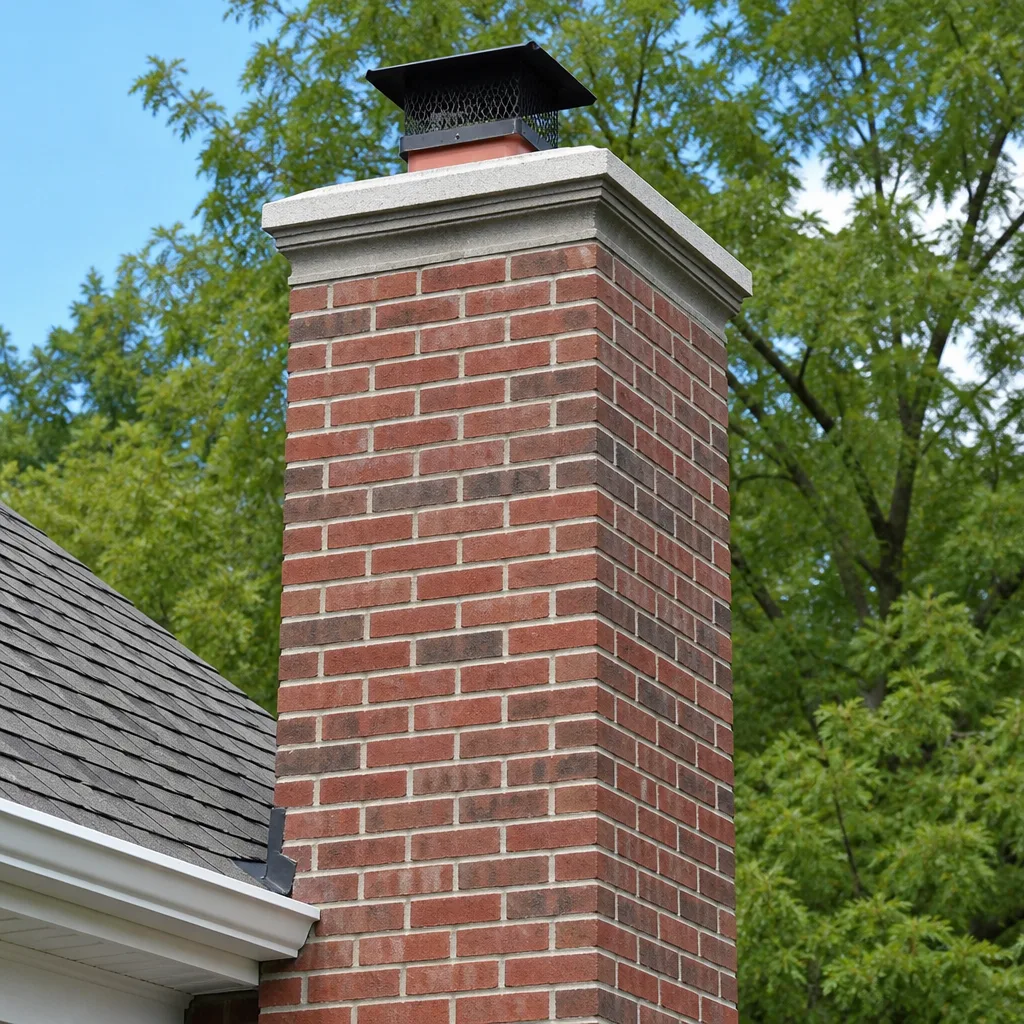 Masonry repair
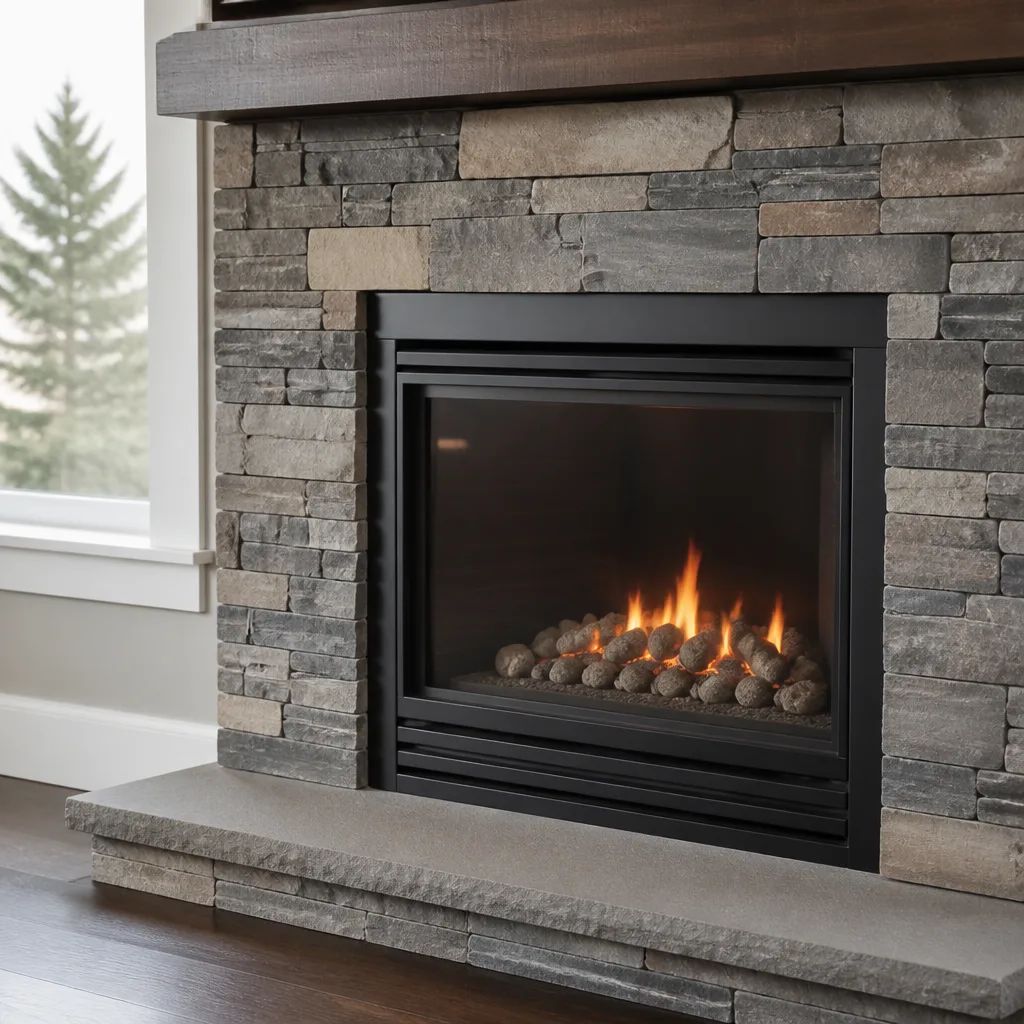 Gas fireplace service
Level 1 sweep and inspection to the NFPA 211 annual standard - flue, crown, cap, and flashing checked and photographed
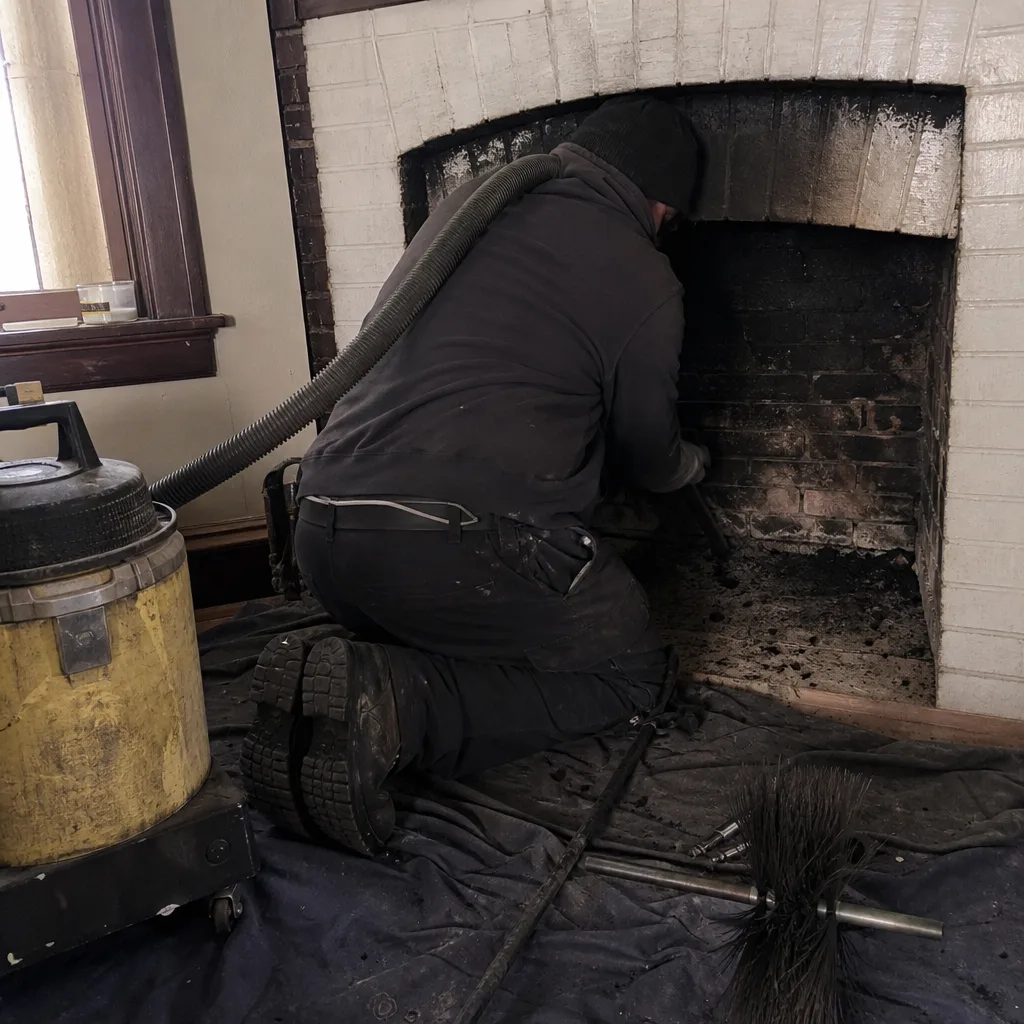
Chimney sweep logs do not sweep chimneys. They loosen some creosote - which then falls where a brush and vacuum still have to collect it.
Seasonal Chimney Cleaning Care for West Town: Year-Round Homeowner’s Guide
Most Chicago homeowners have been told the same thing for years: get your chimney swept in the fall, and you’re set until spring. That advice fails West Town residents in a very specific way. Our brick and limestone buildings sit through brutal freeze-thaw cycles that start in November and don’t quit until late March, and the damage those cycles cause has nothing to do with whether you lit a fire in December. This guide replaces the one-season rule with a month-by-month framework built around how West Town homeowners actually use their fireplaces, what our weather does to masonry, and when each maintenance task actually needs to happen. For more guides & resources on keeping your home safe year-round, explore our blog. You’ll learn why spring deserves more attention than fall, what gas log insert owners still need to schedule, and how to close down a chimney properly when nobody’s using it.
Quick Answer
Year-round chimney care in West Town requires two fixed appointments: a post-winter inspection in April or May to assess freeze-thaw damage, and a pre-season sweep in September or October before burning begins. Households burning three or more cords per season should add a mid-season check in January. Gas fireplace owners still need annual draft and vent integrity checks, even without creosote buildup, because blockages and vent failures don’t require wood smoke to become dangerous. Our Chimney Cleaning Emergency Preparedness Guide for West Town Homes explains what to watch for between inspections.
Styles & brands we work with
Table of Contents
- Why Spring Matters More Than Fall in West Town
- A Month-by-Month Maintenance Framework
- How Usage Frequency Changes Your Scheduling Math
- Gas Fireplace Owners: What Still Needs Checking
- Summer Tasks: Crown, Cap, and Masonry Repairs
- Closing Down a Chimney for Extended Non-Use
- Common Mistakes to Avoid
- When to Call a Professional
- Frequently Asked Questions
- The Bottom Line
Why Spring Matters More Than Fall in West Town
Ask any chimney sweep in West Town what the busiest season should be, and you’ll get an answer that surprises most homeowners: April, not October. Here’s why. Every winter, water finds its way into the tiny cracks in your chimney crown, the mortar joints between bricks, and the gap where the flue tile meets the cap. When temperatures drop below freezing, that water expands by roughly nine percent. The ice pushes against the masonry from inside those cracks, widening them slightly. When things thaw, more water gets in, freezes again, and widens the crack further. After one Chicago winter, the damage is often invisible to the naked eye. After three or four winters, it’s structural.
West Town’s housing stock makes this worse. Many homes in the neighborhood were built between 1880 and 1930, with original brick chimneys that have now survived 100-plus freeze-thaw cycles. The mortar used a century ago was softer than modern mixes, and the crowns on many older chimneys were built without proper overhang or drip edges. Every cycle of freezing and thawing works on those weak points. By the time you see spalling brick or a visible crack, the damage underneath is usually further along than it appears.
The spring inspection is not the same as the fall sweep. A fall sweep removes creosote before burning season. A spring inspection looks for what winter did to the structure while you were using it or ignoring it. That distinction matters because structural damage left through summer accelerates. Summer heat expands the masonry slightly, and the afternoon thunderstorms that roll through Chicago dump water into any opening that has formed. Warm weather doesn’t pause the damage. It often speeds it up because water sits in warm cracks longer without freezing and pushing itself out.
If you only make one appointment this year, make it the April or May inspection. The fall sweep can wait. Winter damage cannot.
A Month-by-Month Maintenance Framework
Here’s what a sensible year looks like for a West Town homeowner with a wood-burning fireplace. Adjust based on how often you burn, which we’ll cover in the next section.
April: Post-Winter Inspection
Schedule your chimney inspection once the last freeze has passed, typically mid-April in West Town. The technician should check the crown for cracks, the mortar joints for deterioration, the flashing where the chimney meets the roofline, and the interior flue for any water staining or spalling that indicates moisture penetration. This is also when you’ll find out whether any animals attempted to nest over the winter.
May: Address Structural Findings
If the April inspection found crown cracks or mortar damage, May is the time to get repair quotes. Contractors are less busy than they will be in September and October, which means faster scheduling and, in many cases, better pricing. Repointing mortar joints or sealing a crown in May gives the materials a full summer to cure properly before the next freeze cycle begins.
June – July: Cap, Screen, and Animal Exclusion
Chimney swifts, squirrels, raccoons, and birds all look for nesting spots in late spring and early summer. If your cap is damaged or missing, July is when you’ll notice the scratching sounds. A properly fitted cap with side screening keeps animals out while still allowing proper draft. This is also a good month to schedule any interior masonry repairs, since dry summer weather means materials set faster and more predictably.
August: Dryer Vent Check
While you’re thinking about fire safety, August is a sensible month to book a dryer vent cleaning in West Town. Lint buildup is a year-round problem, but summer humidity can make slow-drying clothes more noticeable, and many homeowners first realize they have a vent restriction when the dryer starts taking two cycles to finish a load. Addressing it before fall keeps both of your home’s fire-risk systems in good shape entering heating season.
September: Pre-Season Sweep
The classic fall sweep happens in September or early October, before the first fire. A professional sweep removes creosote from the flue liner, checks the damper operation, verifies draft, and confirms the cap and screen are still secure. If you skipped the spring inspection, this visit has to do double duty, and some structural issues are harder to catch in the fall when temperatures are dropping and materials are contracting.
October – November: First Burns and Draft Checks
Your first fire of the season tells you a lot. Smoke backing into the room means a draft problem, which could be a blocked flue, a cold chimney, or a damper issue. Strange odors on the first few burns are normal, as dust burns off the firebox, but persistent chemical smells or visible smoke spillage warrant a call.
December – February: Usage Monitoring and Mid-Season Check
Heavy burners (three or more cords per season) should have a mid-season check in January. This visit measures creosote buildup and identifies problems while they’re still manageable. Light burners can often skip this, but anyone burning daily through the cold months should not wait until March to find out the flue is restricted.
March: Final Heavy-Burn Care and Shutdown Preparation
As burning season winds down, note any issues you observed over the winter: smoke smells on windy days, difficulty starting fires, water in the firebox after rain. Make a list and have it ready for the April inspection. Don’t clean out ashes aggressively at the end of the season; a thin layer of ash in the firebox actually protects the firebrick from summer humidity.
How Usage Frequency Changes Your Scheduling Math
The one-size-fits-all annual sweep works for households that burn occasionally: weekend fires, holiday gatherings, a few evenings a month during the coldest stretches. But West Town has plenty of homeowners who use their fireplace as a primary heat source for the living area from November through March. Those households operate on a completely different schedule.
Here’s how creosote actually accumulates. Creosote forms when wood smoke cools and condenses on the flue walls before it exits the chimney. The rate of accumulation depends on three things: how hot the fire burns, how dry the wood is, and how much you burn. A household burning a cord of dry hardwood per season might end up with a sixteenth-inch of creosote, which is well within safe limits. A household burning three cords of mixed wood, some of it less than ideally seasoned, can accumulate a quarter-inch or more in the same period. A quarter-inch is where the National Fire Protection Association says you have a problem that needs addressing.
Here’s the scheduling math that most guides miss:
- Light use (under one cord per season, occasional fires): One pre-season sweep in September or October is sufficient, plus the annual spring inspection for structural needs.
- Moderate use (one to three cords, regular weekend burning): Pre-season sweep in September, plus a visual check in December or January if you notice any change in draft or burning behavior.
- Heavy use (three or more cords, near-daily burning November through March): Pre-season sweep in September, mid-season inspection and possible second sweep in January, and post-season inspection in April. This household should expect two sweeps per year in most winters.
One thing people don’t realize: creosote accumulation is not linear. The first eighth-inch forms slowly. After that, the rough surface of existing creosote catches more creosote, and buildup accelerates. That’s why heavy burners can’t stretch a single sweep through an entire Chicago winter. The second half of the season deposits creosote faster than the first half did.
If you’re not sure which category you’re in, track your wood use for one season. Most fireplace cords in the Chicago area run about $300 to $450 delivered, and a standard face cord stack is 4 feet by 8 feet by 16 inches. If you’ve burned through more than two of those stacks by February, you’re in the heavy-use category.
Gas Fireplace Owners: What Still Needs Checking
There’s a persistent myth that gas fireplaces don’t need chimney maintenance because there’s no creosote. That’s only half true. Gas fireplaces don’t produce creosote, but they do produce water vapor, carbon monoxide, and acidic combustion byproducts that affect the flue differently than wood smoke does.
Gas log insert owners in West Town should schedule an annual inspection focused on these areas:
- Vent integrity: Gas inserts use either a direct vent through an exterior wall or a co-linear vent running through the existing masonry chimney. Either way, the vent joints, seals, and termination point need checking. A separated vent joint in a gas system is more dangerous than heavy creosote in a wood system because the exhaust is invisible and odorless.
- Burner ports: When burner ports clog, the gas doesn’t combust completely, which produces carbon monoxide. A visual inspection of the burner and ignition system catches clogs before they become a problem.
- Draft performance: Gas inserts still need proper draft to move combustion byproducts outside. A blocked or restricted flue, even with a gas appliance, sends carbon monoxide into the living space.
- Glass and gasket condition: The gasket around the glass front keeps combustion gases contained. Gaskets wear out over time, and a worn gasket means exhaust leaking into the room.
- Condensation damage: Gas combustion produces significant water vapor. In a masonry chimney without a proper liner, that moisture soaks into the brick and creates the same freeze-thaw damage that wood-burning systems cause. A properly sized liner manages this, but older gas conversions often skipped the liner installation.
If you have a gas log set in a masonry fireplace that was converted from wood, pay special attention to whether a liner was installed during the conversion. Plenty of West Town homes converted to gas in the 1980s and 1990s without adding a liner, and those chimneys have been slowly deteriorating for decades. The fix is often a DuraFlex flexible liner or a HeatShield ceramic resurfacing, depending on the flue condition. We’ve seen both scenarios in West Town regularly enough to consider it a neighborhood-wide issue rather than an occasional oddity.
Gas fireplace owners should also run the unit for 10 to 15 minutes once per month during the summer. It burns off dust, keeps the valve working, and gives you an early warning if something isn’t functioning. A gas fireplace that sits idle from April to November is more likely to fail on first start than one that’s been cycled monthly.
Summer Tasks: Crown, Cap, and Masonry Repairs
Summer is repair season, and July is the sweet spot. Here’s what needs attention and why the timing matters.
The Chimney Crown
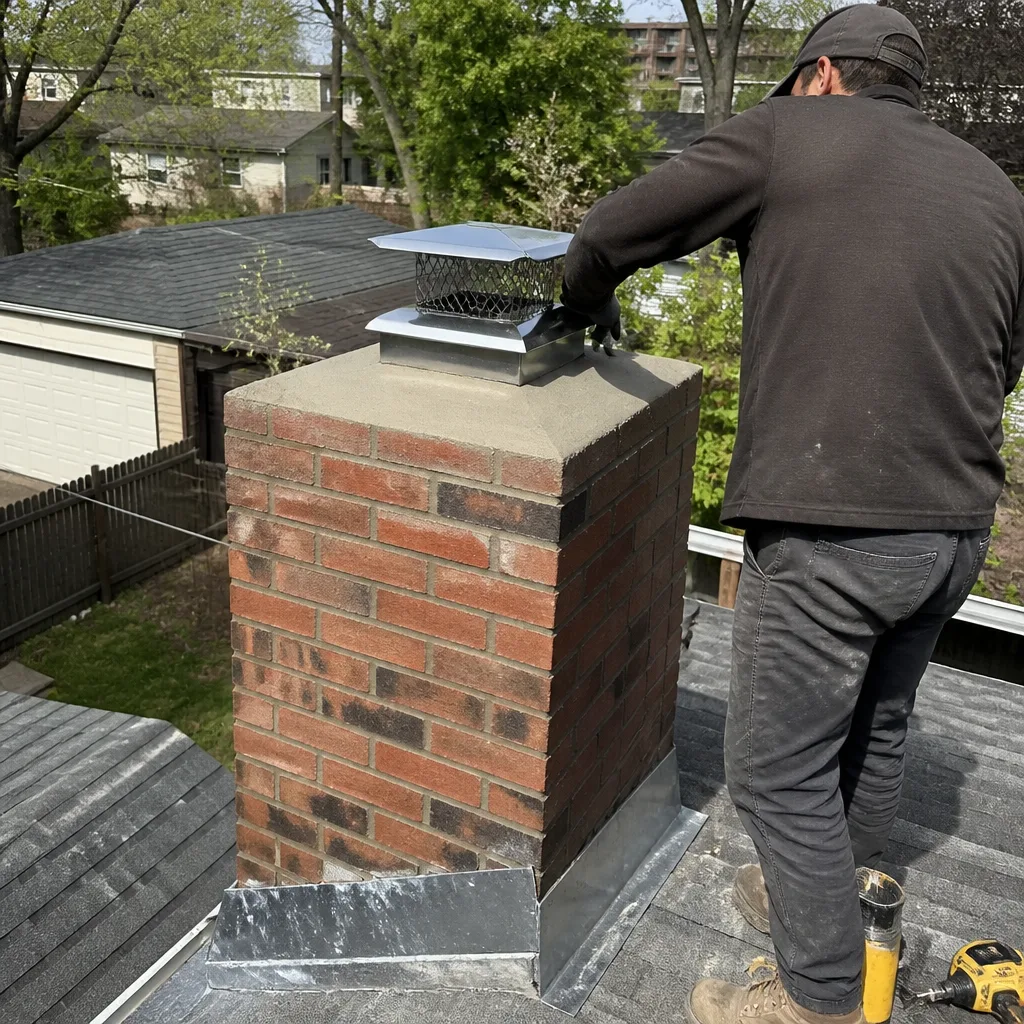
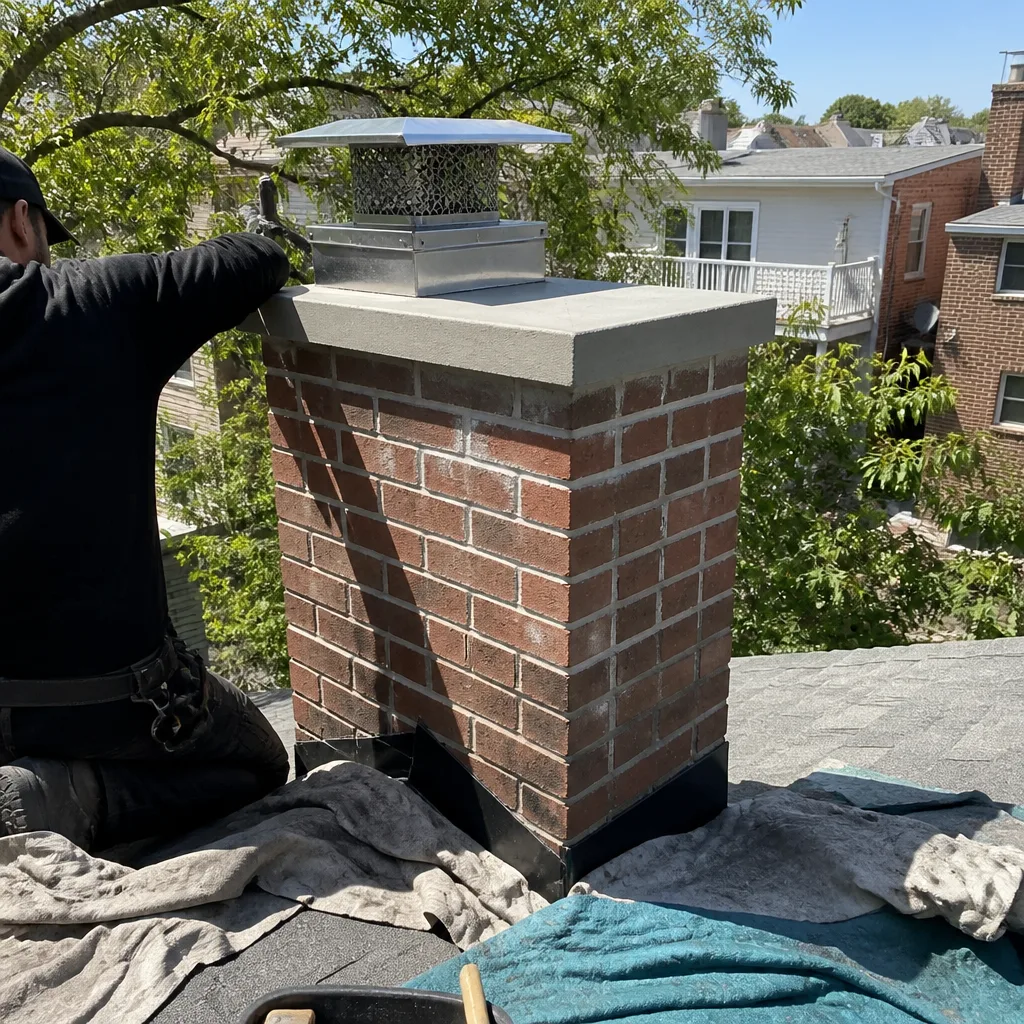
The crown is the concrete slab at the very top of the chimney that seals the top of the masonry structure. It’s your first line of defense against water intrusion, and it’s the most commonly overlooked chimney component because nobody sees it without getting on the roof. Hairline cracks in the crown let water into the brick structure below. In a West Town winter, that water freezes and pushes the crack wider. By the following spring, a hairline crack is a real opening.
Crown repair is straightforward when caught early: the crack gets cleaned and filled with an appropriate crown sealant or a full crown is repoured. Let it go too long and the damage extends into the flue, the smoke shelf, or the firebox. The repair bill triples.
The Chimney Cap and Screen
The cap keeps rain out of the flue. The screen keeps animals out. Both matter. A missing cap lets water pour directly down the flue, where it mixes with creosote and creates an acidic slurry that attacks brick and mortar from the inside. A missing screen invites birds, squirrels, and raccoons, and in West Town, chimney swifts are a genuine issue. Chimney swifts are protected under federal law, which means if they nest in your chimney, you cannot legally remove them until they leave on their own. A proper cap with screening prevents the whole situation.
Masonry Repointing
West Town’s older brick chimneys need repointing on some schedule. Mortar joints erode from weather exposure, and when they go, bricks start moving independently. That’s when you see the stepped cracks running up the side of a chimney, and that’s when the repair gets expensive. Repointing is spraying new mortar into the joints around intact brick. It’s a standard repair that a chimney repair specialist in West Town can complete before the bricks themselves start failing.
Why July?
Contractor availability in the chimney trade follows a predictable pattern. September through December is peak demand: everyone wants a sweep before the holidays. Spring sees the inspection rush. July and August are the slow months, which means faster scheduling and more flexible pricing. Masonry materials also cure better in warm, dry conditions. A crown poured in July cures properly before the first freeze. A crown poured in late October has a much shorter window to reach full strength.
Closing Down a Chimney for Extended Non-Use
Some West Town homes sit empty for stretches. Snowbirds head south in January. Rental properties turn over and sit vacant between tenants. Family homes get listed for sale and wait months for closing. In all these cases, the chimney needs specific preparation before the house goes quiet.
A chimney that isn’t being used still moves air. Warm air rises through the flue, drawing replacement air from the house, which draws in outside air through every other gap. And when outdoor humidity is high, that moving air carries moisture through the flue and into the masonry. Add a vacant house with no heat running, and you have a cold chimney interior that encourages condensation.
Here’s the correct shutdown procedure:
- Schedule a final cleaning before the vacancy begins. You don’t want creosote sitting in a cold, damp flue for months. Creosote absorbs moisture, which weakens the masonry around it.
- Close the damper firmly and verify it seats properly. A damper that doesn’t close fully lets a constant draft pull moist air through the flue for the entire vacancy.
- Install or verify the cap and screen. The cap is doing all the work while nobody’s watching. It needs to be secure, even if it was fine last year.
- If the home sits empty through winter, and the chimney is on the exterior wall, consider whether the flue needs a temporary top-sealing damper or a closure plate. This is uncommon but worth asking about during the pre-vacancy inspection.
- Leave a note or set a reminder to inspect the firebox and damper area when the house is reoccupied. Any moisture staining means the cap failed or condensation was accumulating.
For seasonal homes that sit empty from January through March, the shutdown becomes part of the fall routine: sweep, close, cap, verify. When you return in spring, the April inspection doubles as the reopening check.
How Often Should a Chimney Be Swept in West Town?
The National Fire Protection Association standard is the baseline: chimneys, fireplaces, and vents should be inspected at least once a year, and cleaned as needed based on accumulation. But “as needed” varies widely by household. Light burners in West Town can sometimes stretch a sweep to two years, though we still recommend the annual inspection even when a full sweep isn’t called for. Moderate burners need an annual sweep before the season. Heavy burners need two per year. If you’re ever uncertain, schedule an inspection and let the technician measure the accumulation. The measurement tells you whether a sweep is needed now or can wait.
See the difference
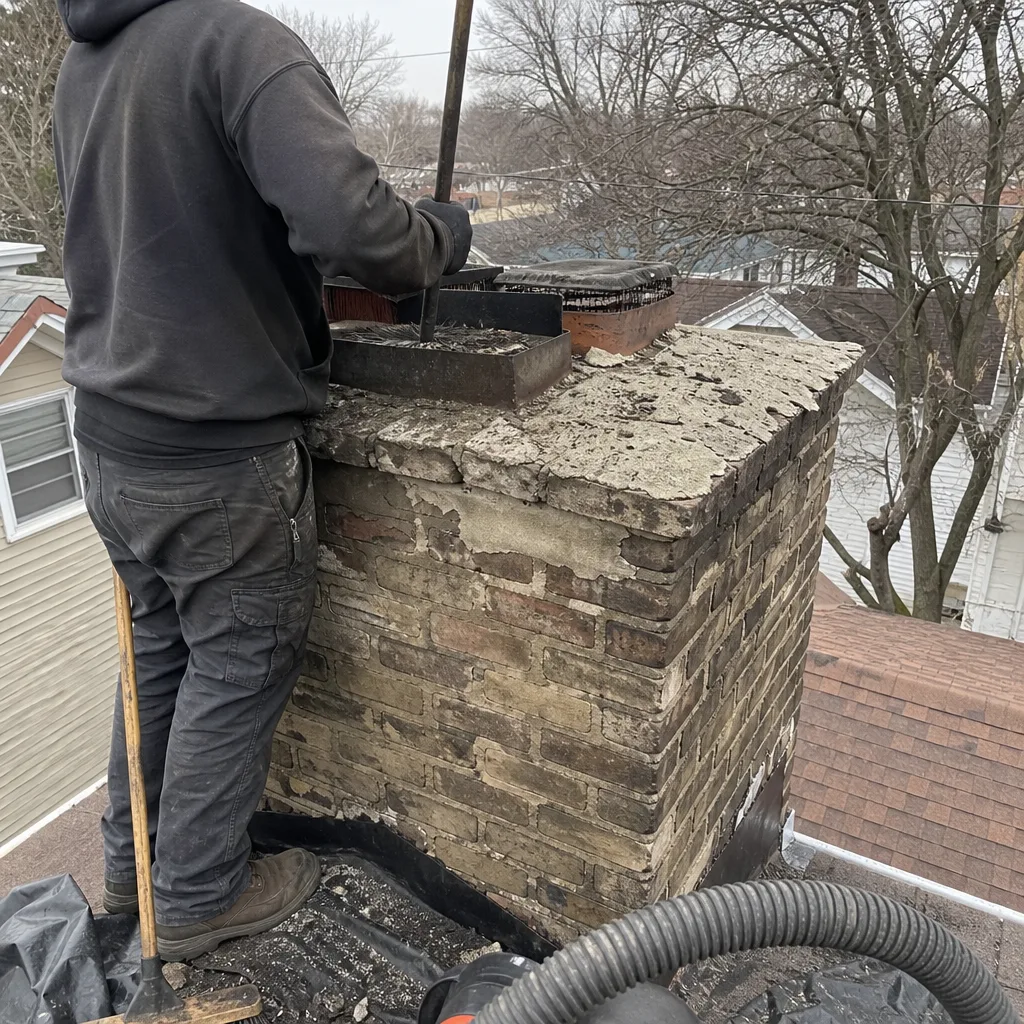 Before
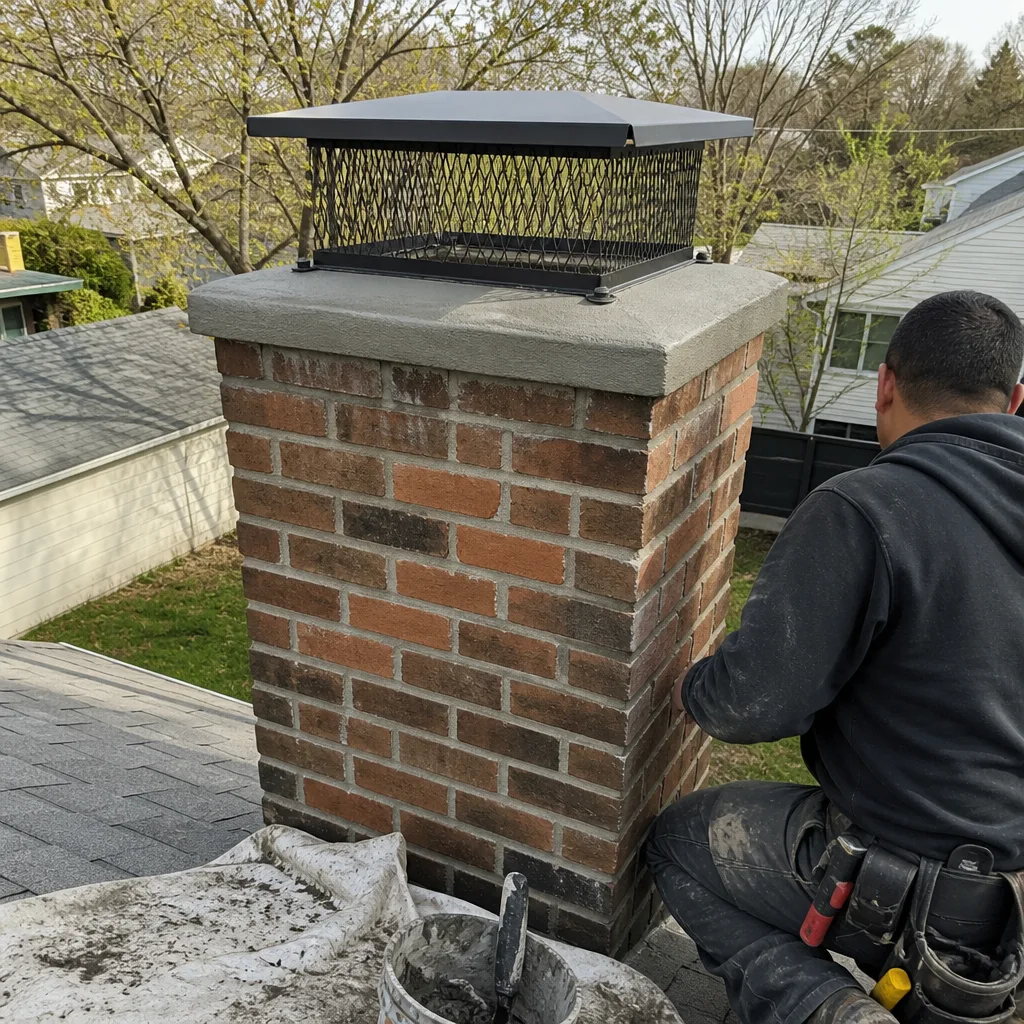 After
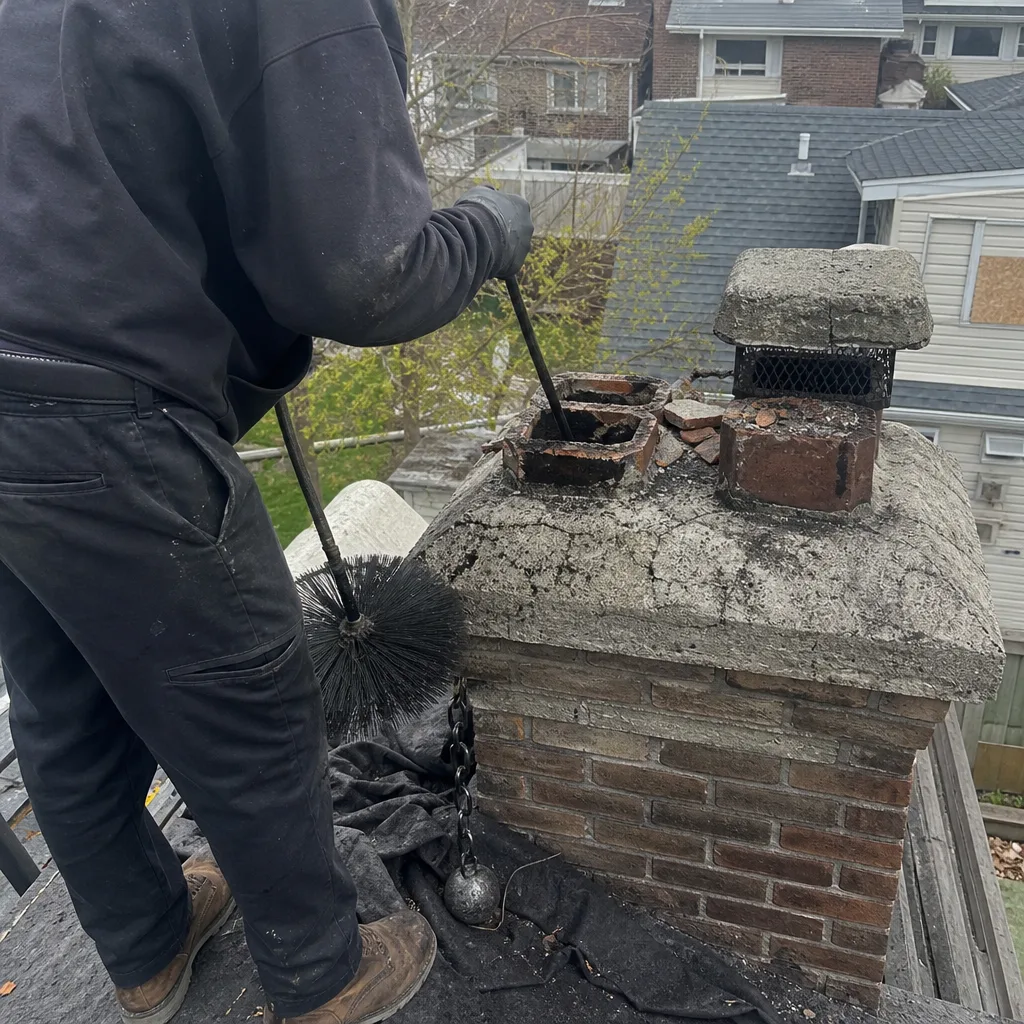 Before
 After
 Before
 After
What Are the Signs of Chimney Damage to Watch For?
Water stains on the ceiling or walls near the chimney, white staining on exterior brick, spalling brick faces on the ground, a damper that’s hard to operate, or smoke smells in the house even when there’s no fire. In West Town brick homes, pay special attention to the exterior chimney face. If the brick looks different on the chimney than the rest of the house, that’s weather exposure, and it’s worth a closer look. Inside, any fluffy or shiny creosote deposits in the firebox or on the damper plate signal accumulation that needs professional attention.
What’s the Difference Between a Level 1 and Level 2 Chimney Inspection?
A Level 1 inspection is the standard annual check: visual examination of the accessible portions of the chimney, appearance of the flue interior, basic appliance connection check. A Level 2 inspection is more involved and uses camera equipment to inspect the entire flue interior. It’s required when you’re changing the system (switching from wood to gas, for example), after a chimney fire, after an earthquake or severe weather event, or when a property changes hands. Real estate transactions in West Town typically call for a Level 2 inspection as part of the due diligence process.
Common Mistakes to Avoid
- Skipping the spring inspection because you already did the fall sweep. The fall sweep cleans creosote. It does not assess winter freeze-thaw damage. They’re separate tasks, and both matter.
- Assuming gas fireplaces don’t need maintenance. Gas systems fail dangerously without regular checks, and the condensation they produce damages masonry just as surely as rain does.
- Waiting until October to schedule anything. By October, the best chimney contractors are booked through December. Spring and summer appointments get more attention and better scheduling.
- Ignoring a missing or damaged cap. A $150 cap replacement prevents water damage and animal intrusion that can run into thousands of dollars in repair costs.
- Burning unseasoned wood to save money. Wet wood produces more creosote per fire and burns cooler, which means more of the smoke condenses in the flue. It costs more in sweeping frequency than it saves in wood.
- Closing the damper too soon after a fire. The fire may look out, but coals continue releasing moisture and combustion byproducts for hours. Closing the damper immediately traps those gases in the house.
- Treating the dryer vent as an afterthought. Lint fires don’t announce themselves. A clogged dryer vent in a West Town multifamily building puts every unit at risk, not just the one with the dryer.
When to Call a Professional
Some chimney tasks are homeowner-appropriate: checking the firebox visually before lighting a fire, noting water stains or unusual smells, keeping the damper operation smooth, and basic firebox cleaning with a shop vacuum (cold ashes only). Everything else belongs with a trained sweep. If you see smoke entering the room, smell gas, hear animals in the flue, spot water damage near the chimney, or notice brick deterioration on the exterior, those are professional calls. If you’re in West Town and want a straight answer about what needs doing and what can wait, Brightway Chimney Sweep home service area covers the neighborhood, and we offer free estimates. Call (833) 365-6591 and we’ll take a look.
Frequently Asked Questions
A standard chimney sweep in West Town typically runs between $180 and $340 depending on the chimney height, accessibility, and how much creosote has accumulated. See our Chimney Cleaning Cost Breakdown: The West Town Homeowner’s Reference for 2026 for detailed pricing factors. Inspection-only visits run less, and repair work is priced separately after a diagnosis. Call (833) 365-6591 for an exact quote. Estimates are free.
If a camera inspection shows cracked flue tiles, gaps between tiles, or water damage inside the flue, the liner is doing nothing to protect the house from heat transfer or exhaust leakage. That’s not a condition that improves with waiting. But not every liner recommendation is legitimate, which is why you should insist on seeing the camera footage yourself before approving any relining work. If the chimney service won’t show you the images, get a second opinion.
Yes, with a caveat. The cleaning may not be necessary every year for light use, but the inspection is. The annual inspection catches animal intrusion, cap damage, and masonry deterioration before they become expensive problems. Skipping the inspection to save $150 is the most expensive money-saving decision chimney owners make.
A standard sweep takes 45 to 90 minutes from setup to cleanup. A Level 2 camera inspection adds another 30 to 45 minutes. Repair work is scheduled separately based on the findings.
It depends on what was already wrong when you stopped maintaining. A chimney in good condition with a proper cap and crown can go several years with minimal attention, aside from light creosote accumulation. A chimney with existing crown cracks or a missing cap deteriorates quickly. After two or three years of neglect, the repair bill usually exceeds what the maintenance would have cost.
Yes, as long as the wood is properly seasoned. The old rule about never burning pine comes from an era when everyone burned green wood. Dry pine burns hot and fast, which is fine for ambiance fires, but it does build creosote if you’re burning it constantly at low temperatures. Use it for kindling or short fires, and stick to hardwood for long, slow burns.
Yes. We’re a specialist contractor handling chimney sweeping, chimney repair, and dryer vent cleaning under one roof. The two systems share a common failure mode: a restricted exhaust path that creates fire risk. We’d rather inspect and service both than clean one and ignore the other. Call (833) 365-6591 to schedule either service.
The Bottom Line
West Town’s older brick homes need a different maintenance rhythm than the generic “sweep in fall” advice allows. The real schedule has two anchors: a spring inspection that catches freeze-thaw damage early and a fall sweep that prepares for burning season. Heavy burners add a January check. Gas fireplace owners swap creosote concerns for vent integrity and carbon monoxide risks but still need an annual visit. Summer is for caps, crowns, and masonry repairs when contractors are available and materials cure properly. And when the chimney sits unused for long stretches, a proper shutdown prevents more damage than a year of fires. Follow the season, not the slogan.
Written by the team at Brightway Chimney Sweep, serving West Town since 2016.