Last updated October 31, 2026
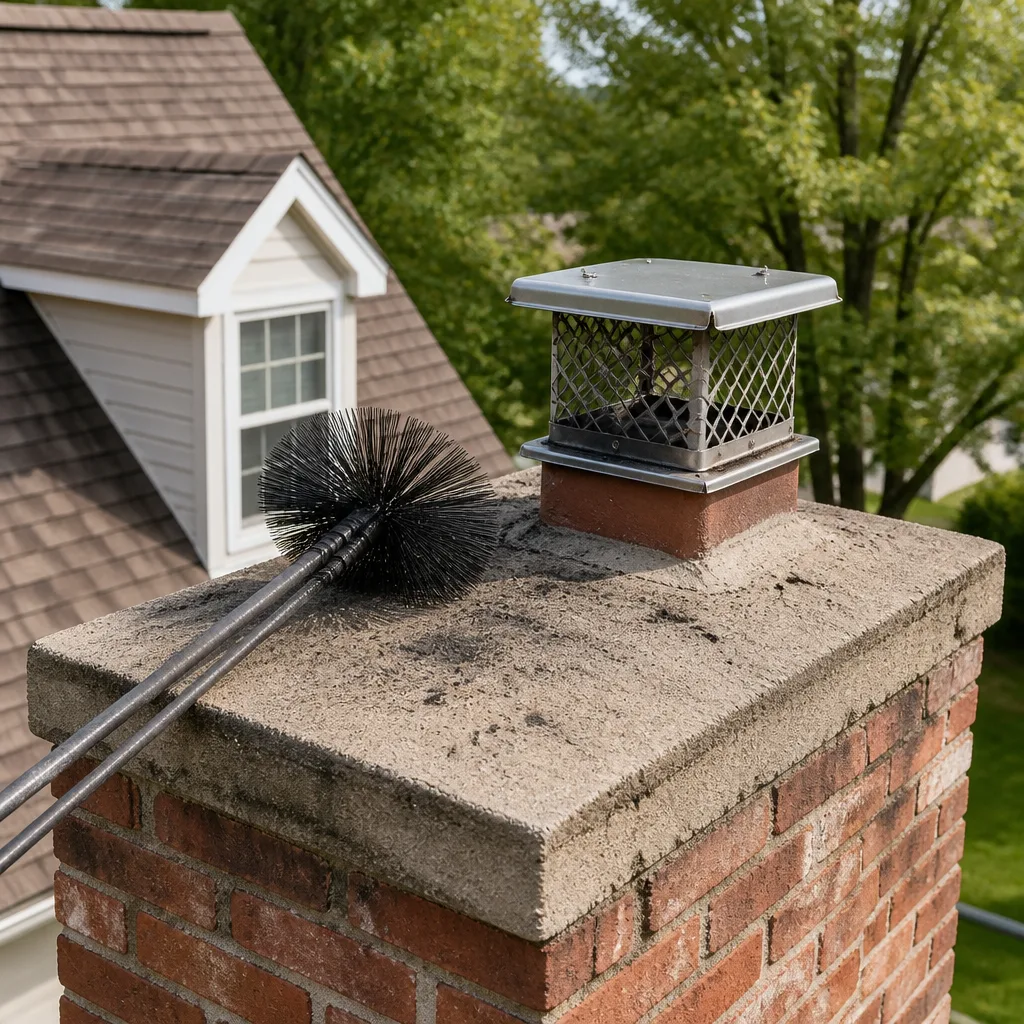 Sweep & inspection
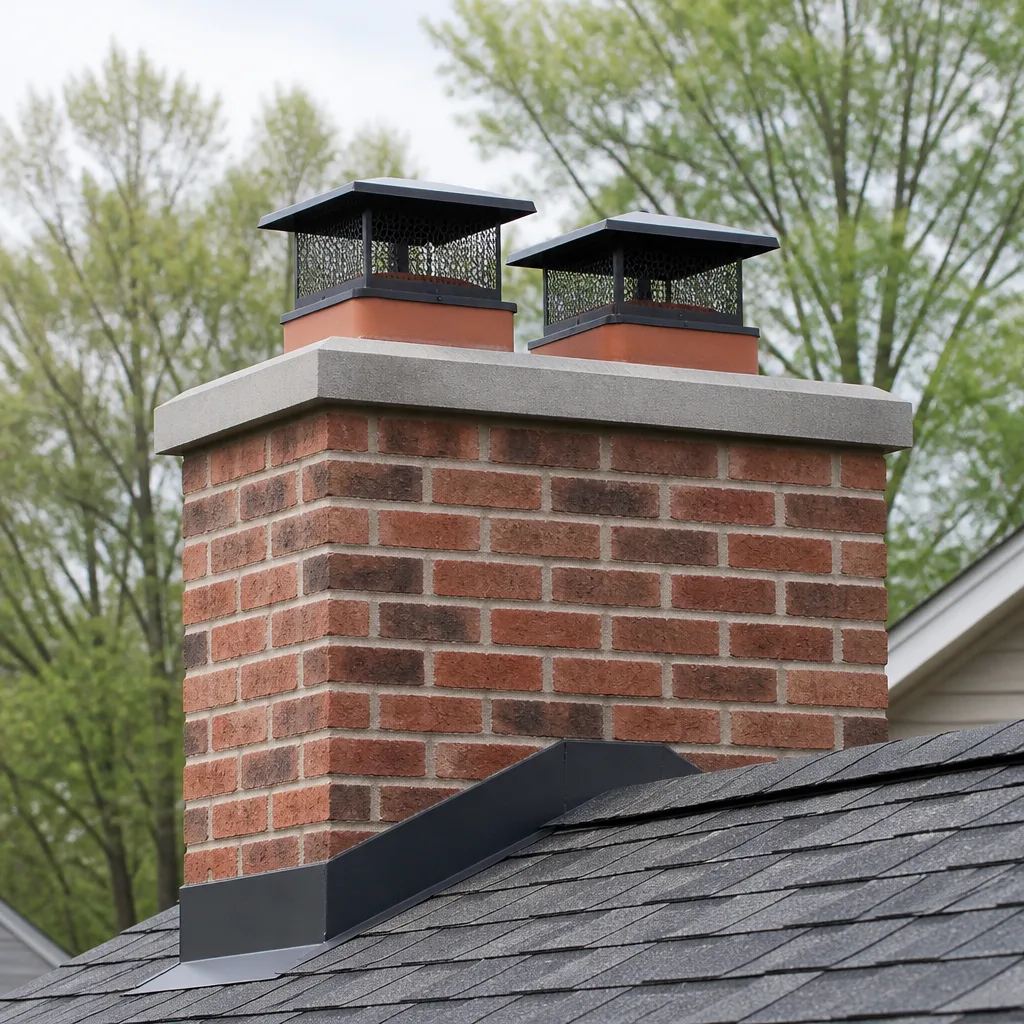 Caps & crowns
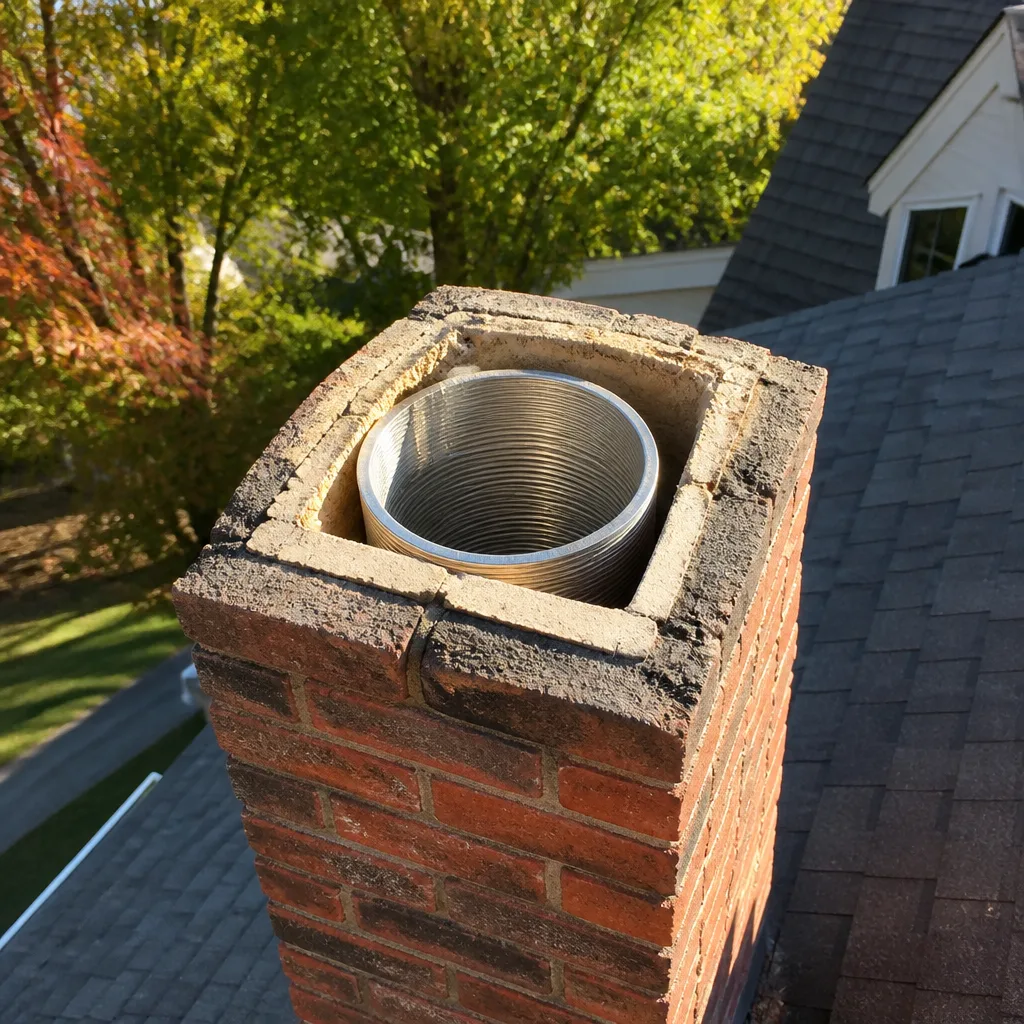 Flue relining
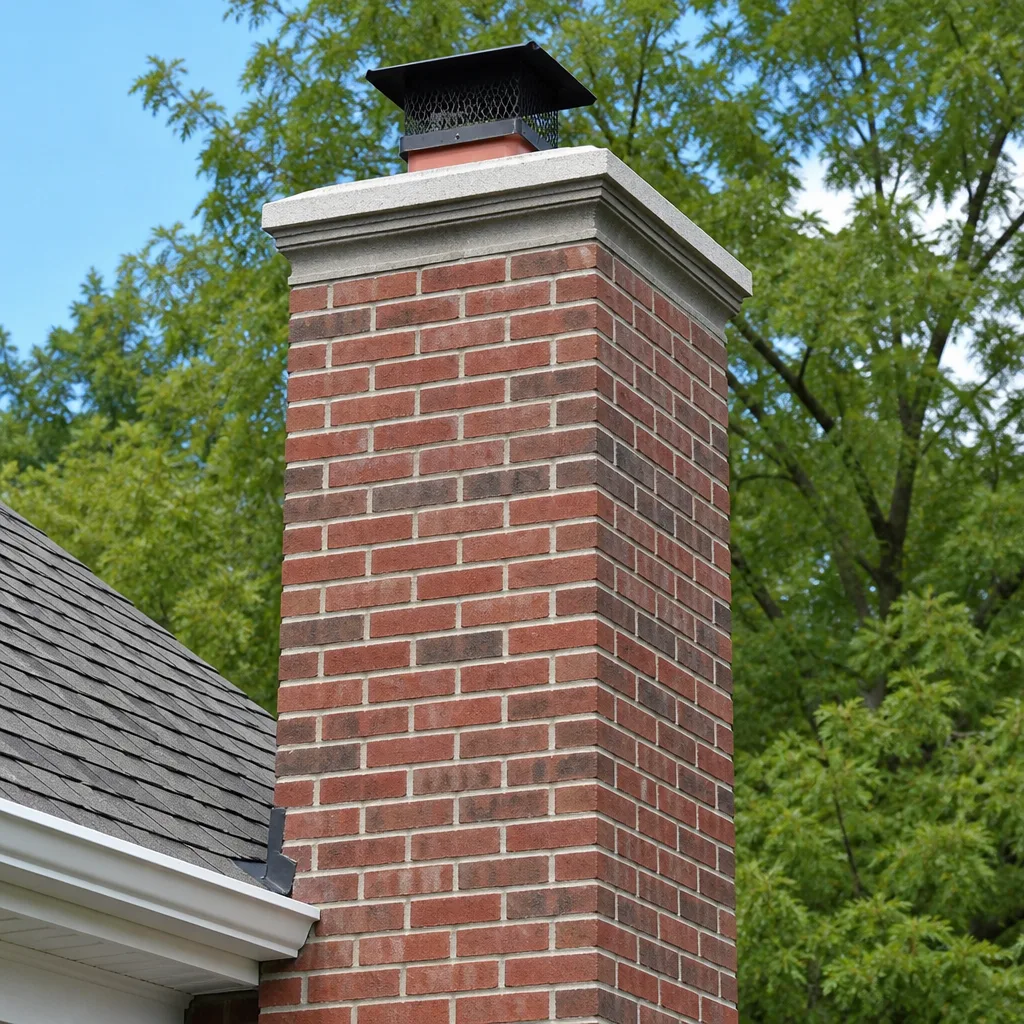 Masonry repair
 Gas fireplace service
Level 1 sweep and inspection to the NFPA 211 annual standard - flue, crown, cap, and flashing checked and photographed
Chimney sweep logs do not sweep chimneys. They loosen some creosote - which then falls where a brush and vacuum still have to collect it.
Choosing the Right Chimney Cleaning Brand: A Buyer’s Guide for West Town
Most West Town homeowners assume that a chimney sweep is a chimney sweep – that the difference between one company and another comes down to price, punctuality, or how clean the truck looks. That assumption costs people real money. The chimney industry is split into two distinct worlds: professional trade suppliers that sell only to certified contractors, and retail brands that sell to anyone with a credit card. The contractor who shows up with materials from the second world is not offering you the same service at a lower price. They are installing products that were never rated for the thermal stress your chimney puts on them. This guide will show you how to tell the difference, which questions to ask, and what the honest answers sound like when you ask them in West Town.
Quick Answer
The right chimney cleaning brand for a West Town home is a specialist contractor who uses trade-grade materials from professional chimney supply manufacturers – not retail hardware-store products – and who can show you the difference. Before you book, ask which product lines they use for liners, mortar, sealants, and caps, and whether they perform repairs with the same crew that diagnosed the problem. A straight answer with named brands is what you’re listening for.
Styles & brands we work with
Table of Contents
- Why “Choosing a Brand” Is Really Three Separate Decisions
- Trade-Grade Materials vs. Retail Chimney Products: What Actually Matters
- The Repair Brand Question: What to Ask and What Correct Answers Sound Like
- Chimney Caps and Chicago Climate: Stainless vs. Galvanized, and Why It Matters in West Town
- Contractor Tools vs. Retail Chimney Kits: Brush Gauge, Rod Flex, and Camera Inspection
- How to Cross-Reference a Contractor’s Product Claims
- Specialist Contractor vs. Generalist with Chimney Services Added On
- Certifications, Supplier Relationships, and What “Trade Specialist” Actually Means
Why “Choosing a Brand” Is Really Three Separate Decisions
When a West Town homeowner says they want to “choose the right chimney cleaning brand,” they are actually making three unrelated decisions at once. Confusing the three is how people end up with a polished quote and a compromised flue.
The first decision is who you hire. That’s the service provider – the company that sends technicians to your home, performs the sweep, and stands behind the work. The second decision is what product brands go into any repair. A chimney sweep may be excellent at cleaning while also installing a liner or sealant product that isn’t right for your flue, or vice versa. The third decision is whether those products meet the standards that actually govern chimney performance: NFPA 211 for chimneys and fireplaces, plus the manufacturer’s own rating for whatever component we’re talking about – a liner, a cap, a crown sealant, or a smoke chamber treatment.
These decisions are linked but not identical. A company can be a careful, honest sweeper and still use the wrong mortar for a smoke chamber repair simply because they haven’t made the leap to industry suppliers. Conversely, a company can stock professional-grade products and rush the cleaning itself. You need all three decisions to go the right way.
Here’s the practical version. When you call a chimney company in West Town, you are not asking one question. You are asking three:
- Who is doing the work, and do they sweep and repair under one roof? If diagnosis and repair are split between two companies, you’ve just volunteered to be the project manager for your own chimney.
- What products will they use if they find damage? This is the brand question most homeowners never ask. It is the one that determines whether a repair lasts 5 years or 30.
- Are those products rated for this specific application? A stainless steel cap that’s great for a mild coastal climate may not hold up to a Chicago winter. A firebox mortar that works for a fireplace in Phoenix may not survive the thermal cycling of a West Town firebox in February.
The rest of this guide walks through each decision in detail. By the end, you’ll know exactly what to ask and why the answers matter.
Trade-Grade Materials vs. Retail Chimney Products: What Actually Matters
Walk into any big-box hardware store and you’ll find a chimney section. It will have a few brushes, some creosote remover, maybe a log-shaped product that claims to clean your flue while it burns. What you will not find is the stuff serious chimney contractors actually use for repairs. You won’t find DuraFlex liner systems. You won’t find HeatShield ceramic flue resurfacing material. You won’t find the stainless steel alloys that meet UL listing requirements for chimney liners. These products don’t sit on retail shelves because their manufacturers don’t sell to consumers. They sell through professional chimney supply houses to contractors who have accounts, training, and warranty authorization.
That distinction is the core of this entire guide. The chimney industry has recognized product suppliers – Rutland and Saver Systems for maintenance products, Gelco for caps and flashings, Olympia Chimney for liners and components, Famco for vents and terminations, Copperfield for a range of chimney components – whose materials are formulated and rated for refractory applications. When a contractor uses off-brand hardware-store caulk or general-purpose construction mortar for a smoke chamber repair, the problem isn’t just that they paid $6 instead of $40 for the material. The problem is that the material was never designed to withstand the thermal cycling a firebox produces. It will crack. It will spall. It will separate from the masonry. And you’ll be repairing the same smoke chamber again in three to five years.
As a homeowner, you don’t need to memorize the entire chimney supply supply catalog. You need to recognize the principle: there is a professional supply chain and a retail supply chain, and they do not overlap. In our experience serving homes across West Town, the homeowners who understand this distinction make dramatically better decisions. They stop asking “how much is a chimney sweep?” and start asking “what will you install in my chimney if repair is needed, and where does it come from?”
A professional chimney sweep in West Town should be able to answer that question without hesitation. If they hem and haw, or say something vague about “quality materials from the local supplier,” you have just learned something important about where their materials actually come from.
The Repair Brand Question: What to Ask and What Correct Answers Sound Like
The single most useful question you can ask a chimney contractor in West Town is not “how much do you charge?” It’s this: “What product lines do you use for repairs, and can you tell me why you chose those over what’s available at a hardware store?”
A contractor who knows their trade will answer immediately. They’ll name product lines. They’ll explain the difference between, say, a DuraFlex flexible liner and a generic aluminum liner. They’ll tell you that HeatShield ceramic flue resurfacing exists as an alternative to full liner replacement in certain flues, that it was developed specifically to restore damaged clay tile liners without demolition, and that most sweep companies can’t offer it because they haven’t been trained or authorized to install it. They’ll mention Gelco caps or Copperfield components and explain why they spec one alloy over another for a given application.
A contractor who doesn’t know their materials will answer with vagueness. “We use top-quality materials.” “We use whatever the job needs.” “Our materials meet code.” None of those are answers. Code is a floor, not a ceiling, and it doesn’t tell you whether the contractor understands the thermal dynamics of a specific chimney.
Here’s what correct answers look like for four common repair categories:
- Mortar: “We use refractory mortar rated for firebox and smoke chamber applications, not general-purpose masonry mortar. Regular construction mortar will not survive repeated thermal cycling.”
- Sealants: “We use high-temperature silicone sealants specifically rated for chimney and venting applications. Hardware caulk breaks down under flue gas temperatures.”
- Liner materials: “We install DuraFlex flexible liner systems for most relining jobs – they’re the professional standard for UL-listed stainless steel relining of damaged or incorrectly-sized flues.”
- Caps: “We spec stainless steel caps from Gelco or Copperfield, sized for the specific flue dimension and rated for the exposure a West Town roof line gets.”
Notice that every good answer names a product line and explains why it’s right. That’s what expertise sounds like when it’s real. And it’s exactly the conversation you should have before signing any repair agreement with a chimney repair company in West Town.
Chimney Caps and Chicago Climate: Stainless vs. Galvanized, and Why It Matters in West Town
Chicago winters are hard on everything that lives outside, and your chimney cap is no exception. A chimney cap sits at the highest point of your roofline, exposed to rain, snow, ice, and the kind of freeze-thaw cycle that destroys materials in one season if they aren’t specified correctly. This is where brand and material choice stops being theoretical and starts affecting whether you’re buying a new cap every few years.
The two materials you’ll encounter are galvanized steel and stainless steel. Galvanized caps are cheaper. They’re also coated with zinc, which corrodes. In a humid climate or a coastal environment, a galvanized cap can start showing rust within a year. In Chicago, the cycle is different: snow sits on the cap, melts into the seams, and refreezes. That freeze-thaw action works against the zinc coating, exposing the steel underneath. Many West Town homeowners with galvanized caps find themselves replacing them every 3 to 5 years, which costs more in the long run than buying a stainless cap once.
Stainless steel caps, when properly specified, typically carry a 10-year rating from the manufacturer. But here’s the thing the marketing materials don’t tell you: that 10-year rating assumes the cap is made from 304 or 316 stainless steel, not a lower-cost stainless blend. It also assumes the cap is properly sized and secured. A “stainless” cap with a cheap galvanized hardware kit will still fail early because the fasteners corrode. When you ask a contractor about a chimney cap, ask two follow-ups: what grade of stainless steel is this cap, and what material are the mounting hardware screws? A specialist will answer both. A generalist won’t know the answers.
This matters in West Town specifically because so much of the housing stock is older masonry construction. Brick chimneys from the 1920s through the 1950s are common here, and they often have clay tile liners and original mortar crowns. The cap is the first line of defense against water intrusion. When it fails, water gets into the chase and the flue, and then you’re not buying a cap anymore – you’re looking at chimney repair in West Town for spalling brick or weakened mortar joints. The cap is one of the cheapest components to install correctly and one of the most expensive to get wrong.
Contractor Tools vs. Retail Chimney Kits: Brush Gauge, Rod Flex, and Camera Inspection
If you’ve ever browsed the chimney section at a hardware store, you’ve seen the retail cleaning kits. They usually consist of a brush, a few fiberglass rods, and a set of instructions that make the job sound simple. What those kits don’t tell you is that chimney cleaning is not a one-size-fits-all operation, and the tooling matters far more than the technique.
The first difference is brush gauge. Professional chimney brushes come in specific wire gauges matched to the flue material. A brush with wire that’s too aggressive for your flue will scratch and damage a clay tile liner or a stainless steel liner. A brush that’s too soft won’t remove glazed creosote – the sticky, tar-like substance that builds up when wood burns at low temperatures. Professional sweeps carry multiple brush sizes and gauges, and they match the brush to the flue dimensions and condition. A retail kit gives you one brush and no way to know if it’s right for your chimney.
The second difference is rod flexibility. Chimney flues are not always perfectly straight. Older homes in West Town often have chimneys with offsets, which require flexible rods that can follow the bend without snapping. Retail fiberglass rods are often rigid enough for a straight run but brittle enough to break inside an offset flue, leaving a rod section stuck in your chimney. Professional equipment includes flexible rod systems designed to navigate offsets without compromising the sweep.
The third difference – and the one that matters most – is inspection capability. A proper chimney service ends with an inspection, and the best inspections use a camera. You can’t see the full interior of a smoke chamber from the top or bottom of the flue. A camera reveals cracks, deteriorating mortar joints, and hidden creosote accumulation. Contractors who perform camera inspections give you evidence of what they found. Contractors who don’t are asking you to take their word for it. That distinction, by itself, separates chimney services more cleanly than almost any other factor. The Brightway Chimney Sweep home service model includes camera inspection with photo documentation because we’ve found that homeowners make better decisions when they can see the condition of their chimney with their own eyes.
How to Cross-Reference a Contractor’s Product Claims
Here’s a method that takes about ten minutes and tells you more about a chimney contractor than their website ever will. When a contractor claims to use professional-grade products, call or email the manufacturer and ask if the contractor is an authorized installer or dealer. Most professional chimney supply manufacturers don’t sell to consumers at all. If a contractor claims to use DuraFlex liners, HeatShield resurfacing, or Gelco caps, those manufacturers maintain records of who they sell to. A quick verification call will tell you whether that contractor actually has a supply relationship or is just name-dropping brands they’ve seen online.
To cross-reference a product claim, follow these steps:
- Ask the contractor exactly which product lines they use for the repair they’re recommending. Get the brand name and the specific product line, not just “stainless” or “ceramic coating.”
- Visit the manufacturer’s website. Look for a “where to buy” or dealer locator. If the contractor’s name appears, that’s a good sign.
- Contact the manufacturer directly. Ask “Is [company name] an authorized installer of your product?” Professional chimney supply brands are small enough that you can reach a real person.
- Ask about consumer availability. If the product is sold retail anywhere, the contractor’s “trade-grade” claim is weaker. HeatShield, DuraFlex, and Gelco do not sell to consumers. That’s the point.
- Verify the warranty. Many professional-grade chimney products carry warranties that are only valid when installed by an authorized contractor. If the contractor is not authorized, any manufacturer warranty is void.
A contractor who sources from the same distributors as big-box stores is telling you something important, whether they mean to or not. It means they’re buying retail-grade materials and marking them up as if they were trade supplies. That’s not a discount for you. It’s a compromise on product quality that you won’t discover until the repair fails.
Specialist Contractor vs. Generalist with Chimney Services Added On
A “specialist contractor” is a phrase that gets tossed around a lot in the home services industry, and it often doesn’t mean much. So let’s pin it down. In the chimney trade, a specialist is defined by three things: the scope of what they do, the suppliers they buy from, and the repairs they can perform without referring you to someone else.
The first test is scope. A generalist contractor – a handyman, a roofer who also does chimneys, a home inspection company that offers a sweep on the side – has a service list that extends far beyond chimneys. That’s fine for painting a wall or patching a roof, but the chimney is a combustion system. It requires a focused understanding of draft dynamics, flue sizing, clearance to combustibles, and local code requirements. The stakes are too high to be one item on a long list of unrelated services.
The second test is supplier relationships. A specialist buys from professional chimney supply houses because they have accounts there. A generalist buys from retail stores because that’s what they have access to. This isn’t about snobbery; it’s about the product lines available. Professional chimney suppliers don’t stock hardware-store caulk because their customers won’t buy it. If a contractor is using products that weren’t available to them through a professional supply account, they’re not a specialist.
The third test is repair capability. A chimney company that only sweeps will, if they find damage, refer you to someone else. That’s not a flaw if they’re honest about it – but it does mean you’re managing two separate contractors for one chimney. A specialist handles the sweep, the diagnosis, and the repair under one roof. When a chimney needs chimney repair in West Town, the repair crew is the same outfit that found the problem, which means there’s no gap between what was diagnosed and what gets fixed.
Here’s the practical difference in a real world scenario. A generalist finds cracking in your clay tile liner. They tell you it needs replacement and hand you the number of a masonry contractor. The masonry contractor takes their word for the diagnosis, opens the chimney, and finds the damage is less extensive than reported – or worse, more extensive. Either way, you’re the one stuck in the middle. A specialist finds the same cracking, shows you the camera footage, and gives you options: reline with a DuraFlex system, restore with HeatShield ceramic resurfacing, or in rare cases, leave it alone if it’s stable. One contractor, start to finish, with the technical knowledge to recommend the right approach rather than the easiest one.
Certifications, Supplier Relationships, and What “Trade Specialist” Actually Means
The chimney industry has several certification bodies, and it’s worth knowing which ones matter. The Chimney Safety Institute of America (CSIA) is the most recognized certifying organization in the field. A CSIA-certified sweep has passed a technical exam covering chimney science, code requirements, and safety practices. There are also dryer vent certifications specifically for exhaust venting work, which matters if you’re hiring for dryer vent cleaning in West Town – a service that addresses one of the leading causes of residential fires in Chicago.
But certifications are only one piece. A contractor can hold a certification and still buy materials from a hardware store. That’s why the supplier relationship matters just as much as the certificate on the wall. When a contractor has an account with a professional chimney supply distributor, they can access product lines that aren’t available through retail channels. DuraFlex flexible liner systems, HeatShield ceramic resurfacing, Gelco caps and flashings, Olympia Chimney liner components, Famco ventilation terminations, Copperfield chimney parts – these are the product lines that actual chimney trade contractors keep in stock because they’re what the job requires.
A trade specialist is comfortable naming these products. Ask a generalist what liner system they use and you’ll get a blank stare or a vague answer about “stainless steel.” Ask a specialist and they’ll tell you which product line they prefer and why. That’s not showing off. It’s a sign that they’ve made enough repair decisions to know the difference between products that hold up and products that don’t.
In West Town specifically, where much of the housing stock dates to the early 20th century, that accumulated judgment matters. Older brick chimneys have quirks. Mortar compositions vary. Flue dimensions don’t always match modern standards. A specialist who has worked on hundreds of these chimneys knows when a standard approach will work and when a chimney needs a more tailored repair. That knowledge shows up in the first conversation, if you know what to listen for.
Common Mistakes to Avoid
- Buying on price alone. A chimney sweep is not a commodity. The company that charges 30% less is often using consumer-grade products and skipping the camera inspection. In West Town, where older masonry construction is common, the inspection is the most valuable part of the service.
- Not asking the product brand question. Most homeowners ask about certifications, insurance, and price – but never ask what mortar or liner will be used if repair is needed. That question is the clearest signal of whether you’re dealing with a specialist or a generalist.
- Assuming “stainless steel” means the same thing everywhere. A stainless cap from a big-box store is not the same alloy or gauge as a stainless cap from Gelco or Copperfield. The difference shows up in year three or four, when the cheaper cap starts to show rust and you’re buying another one.
- Treating the sweep as the end of the service. The sweep is the means to the inspection. If you leave without a written condition report and camera documentation, you’ve paid for a cleaning and skipped the diagnosis. That’s backwards.
- Hiring a generalist and hoping for the best. A handyman with a chimney brush is not a chimney specialist. The chemical and thermal dynamics of a flue system are not intuitive, and the mistakes a generalist makes are expensive to undo.
- Ignoring the dryer vent as a fire risk. Many West Town homeowners think chimney safety ends at the chimney. Dryer vents clogged with lint are a leading cause of residential fires, and a company that handles both under one roof gives you a complete picture of your home’s fire safety.
- Accepting a vague quote without product specs. “Repair smoke chamber, $1,800” tells you nothing. A proper proposal names the product and the system being installed. If the quote doesn’t tell you what you’re buying, you’re not buying a repair – you’re buying a placeholder.
See the difference
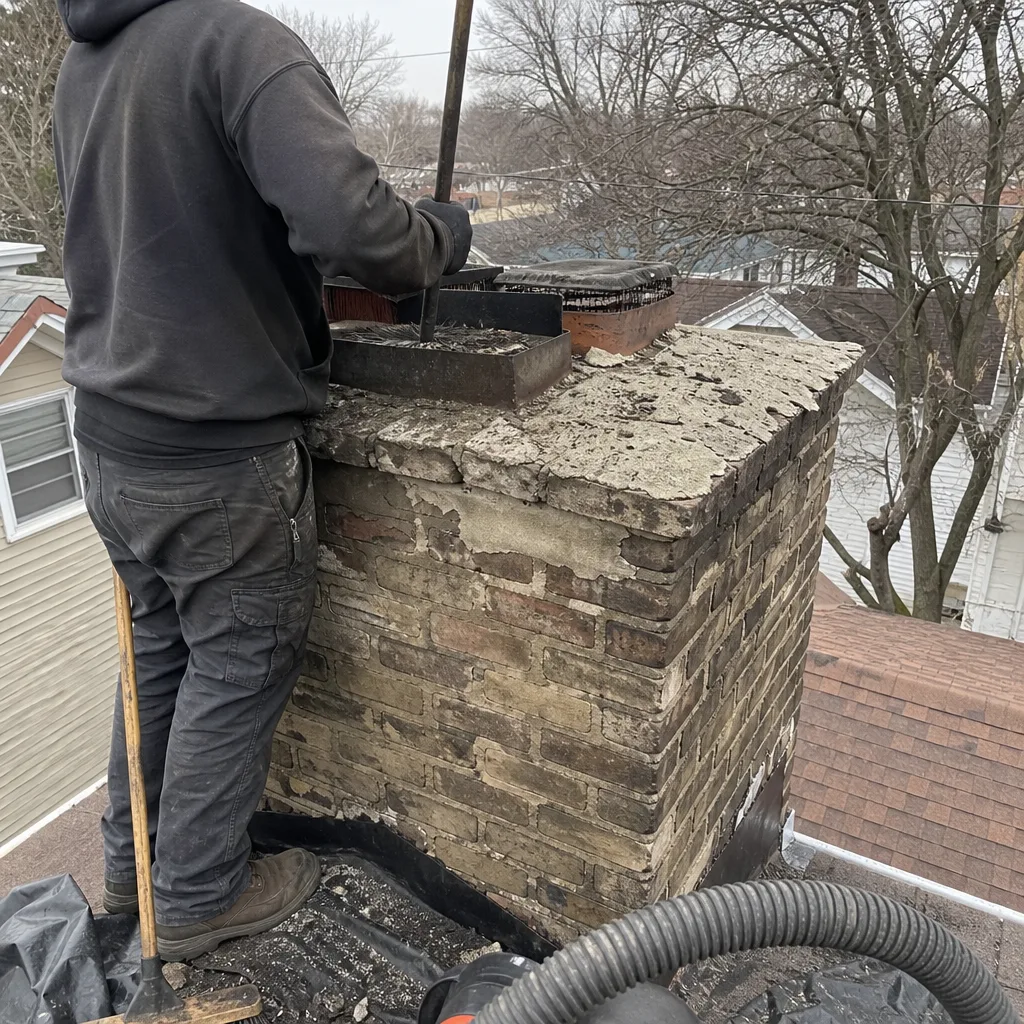 Before
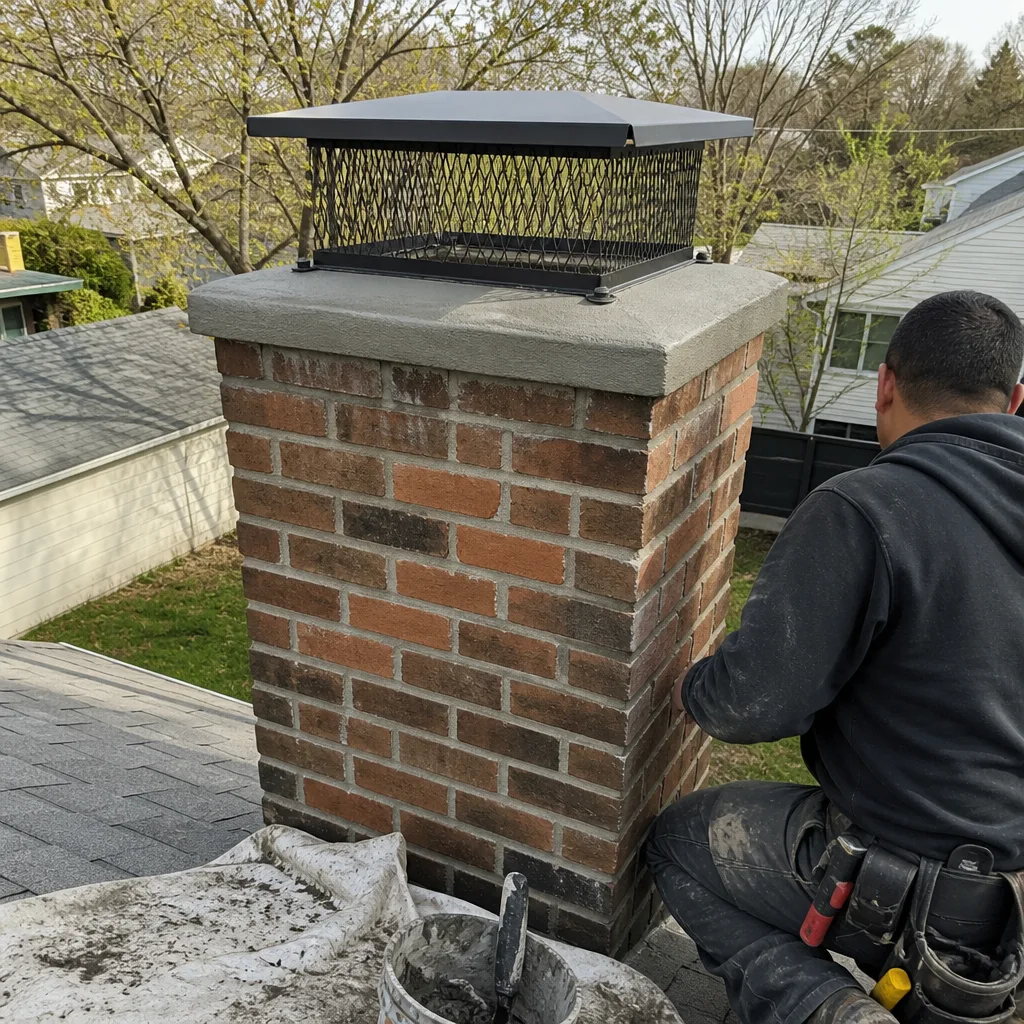 After
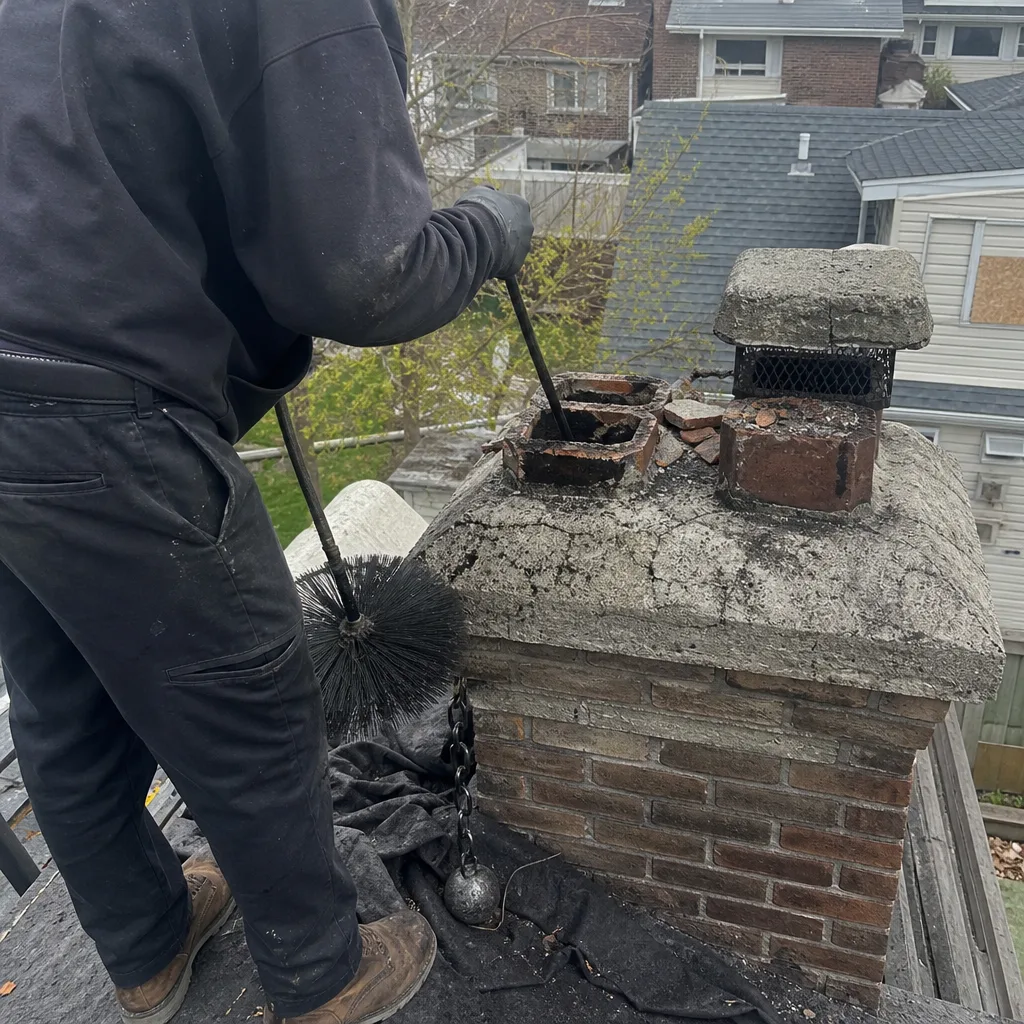 Before
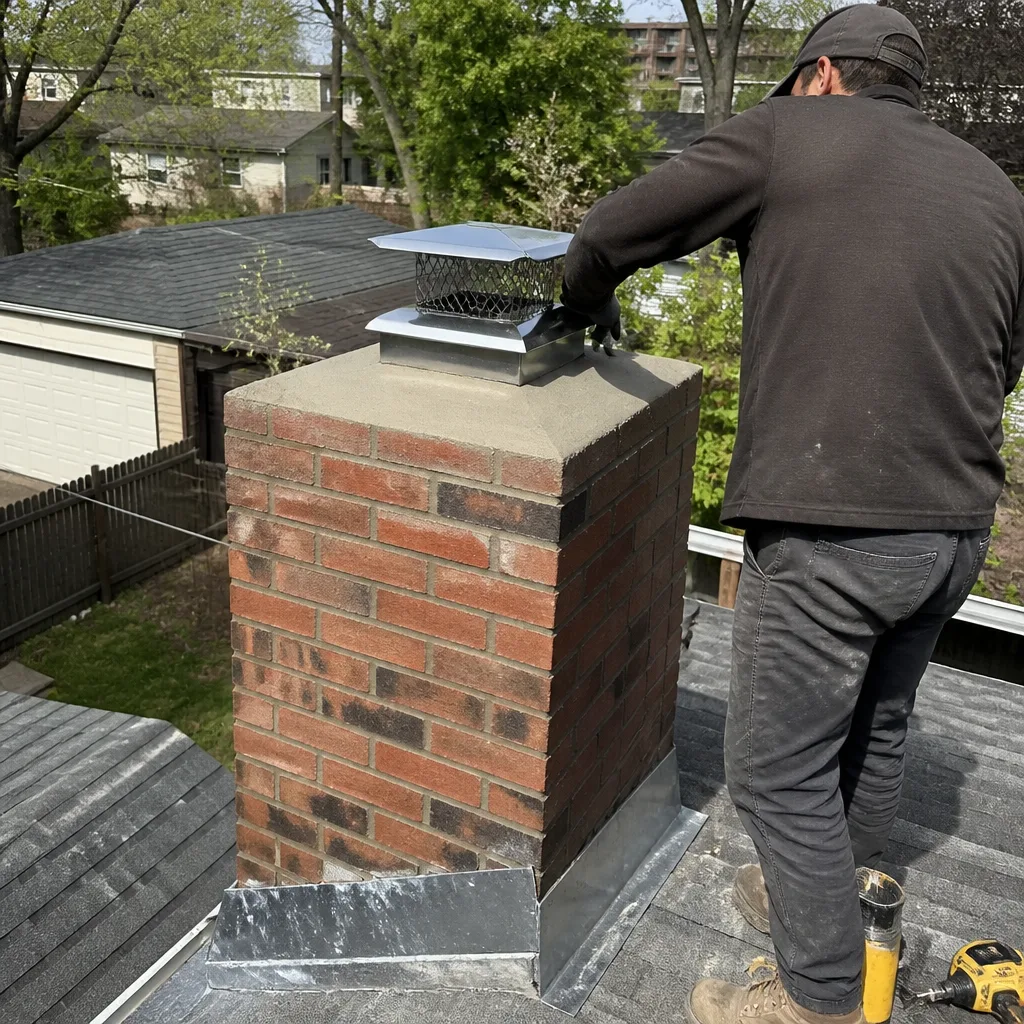 After
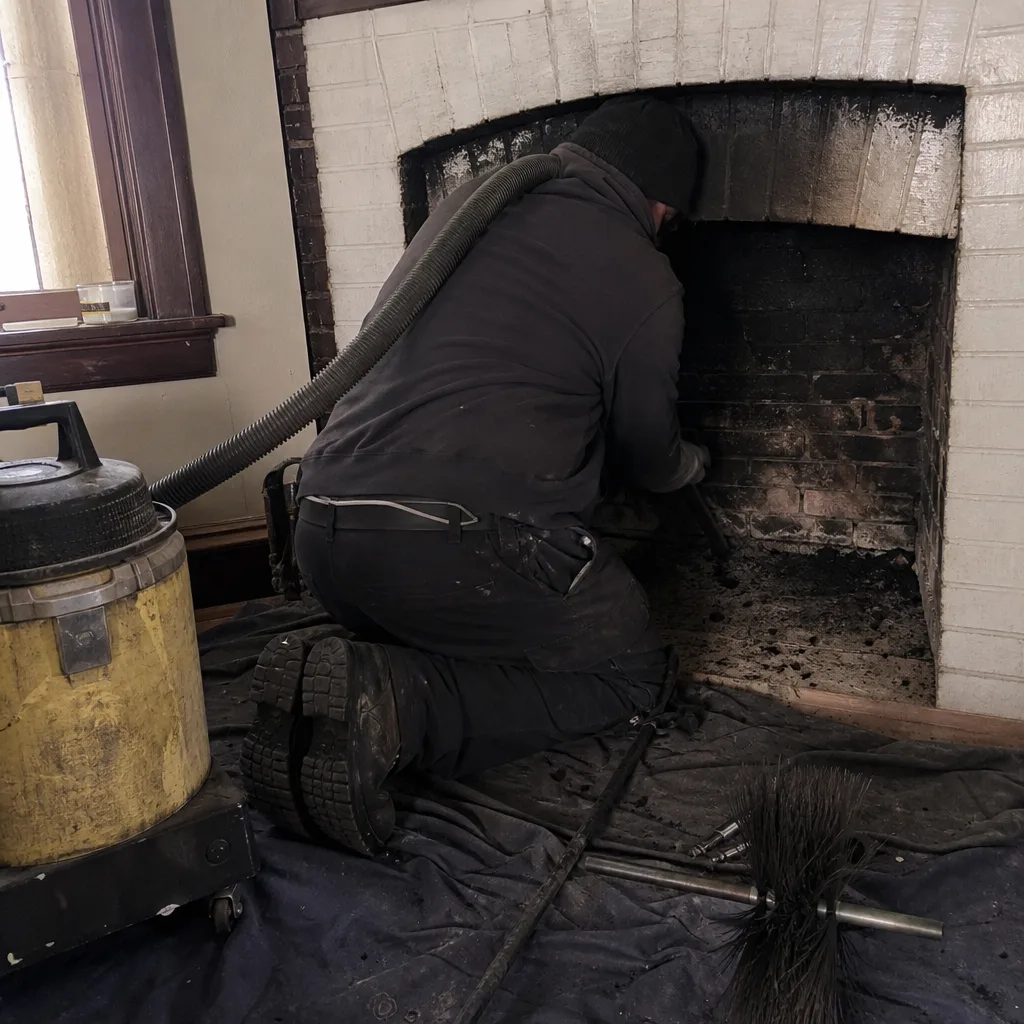 Before
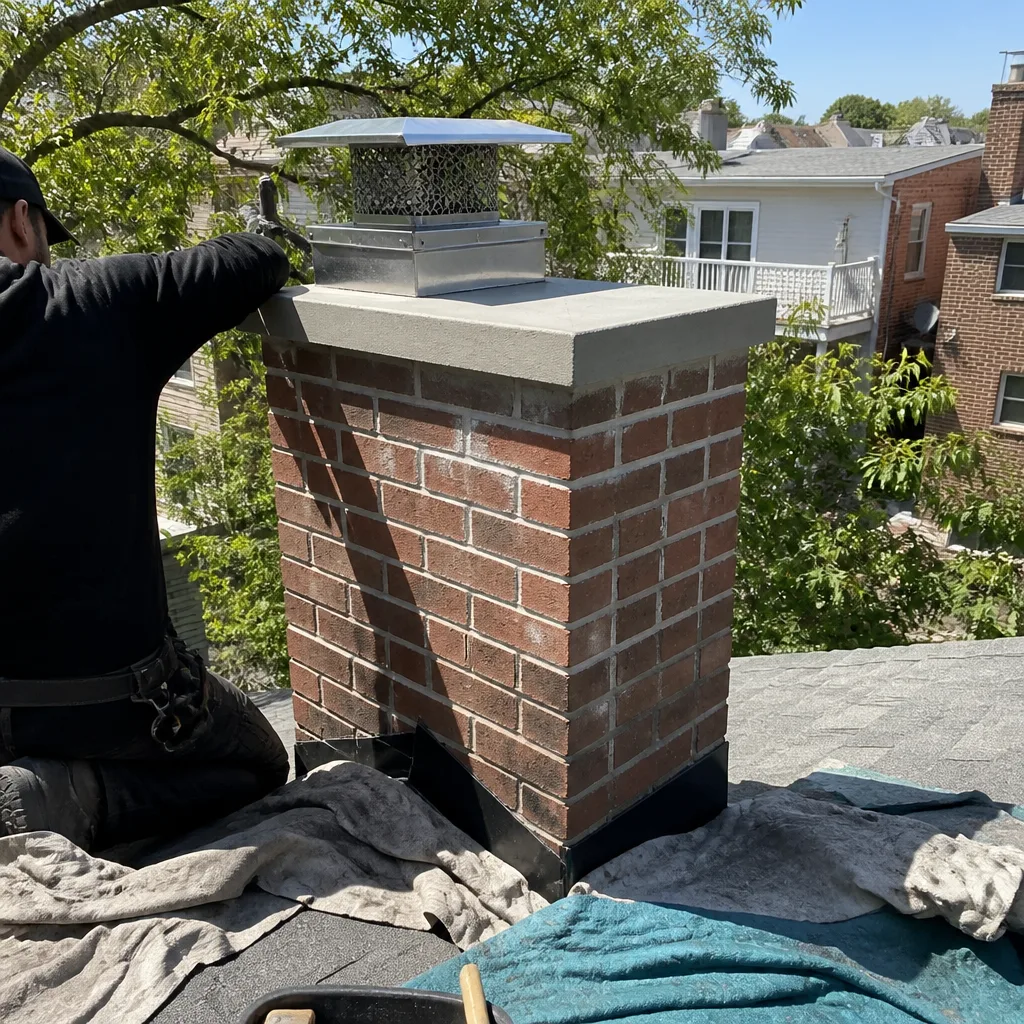 After
When to Call a Professional
Some chimney questions are not research questions. If you see evidence of water staining on the ceiling near the chimney chase, that’s a call. If you smell smoke in the house after the fireplace has been cleaned, that’s a call. If you hear loose materials falling inside the flue when the wind picks up, that’s a call. If your chimney was cleaned last year and you’ve burned more than a cord of wood since, that’s a call. If you’ve never had the chimney inspected in a home you’ve owned for more than two years, that’s also a call, because you don’t know what you haven’t looked at. Brightway Chimney Sweep offers free estimates in West Town – call (833) 365-6591 to schedule an inspection with camera documentation and a written condition report.
Frequently Asked Questions
A professional chimney sweep in West Town typically costs between $150 and $300 depending on the size of the flue, accessibility of the roof, and whether the inspection includes camera documentation. The range matters less than what’s included: a lower quote that skips the camera inspection is not a better deal. Call (833) 365-6591 for an exact quote – estimates are free and we’ll tell you what’s included before we book the appointment.
The NFPA recommends a chimney inspection at least once a year, with cleaning based on what the inspection finds. In practical West Town terms, if you burn more than a cord of wood in a season, or if you burn unseasoned wood, or if you have a masonry chimney from the 1920s through the 1950s, you’ll likely need an annual sweep. The only way to know for sure is to look inside the flue, which is what a camera inspection does.
A chimney sweep removes creosote and soot from the flue; an inspection evaluates the condition of the chimney system, including the liner, mortar joints, smoke chamber, and cap. Most professional chimney companies in West Town perform the sweep and the inspection together, because cleaning without inspecting leaves you with no information about the condition of the system. We’ve found that the inspection is the part that prevents the expensive repairs.
You won’t know from the outside. Cracked clay tiles, gaps between tile sections, and spalling mortar inside the flue are only visible with a camera. If a contractor tells you that you need a new liner without putting a camera in the flue, get a second opinion. If the liner is damaged, a DuraFlex stainless steel liner or HeatShield ceramic resurfacing may be an option depending on the condition of the existing flue. Call (833) 365-6591 for a camera inspection and honest options.
Yes, and it’s one of the most overlooked fire safety items in Chicago housing. Lint accumulates in the vent over time, restricting airflow and creating a fire hazard. The dryer vent cleaning service in West Town we provide addresses this directly – it’s not a bolt-on service but a core part of home fire safety. If your dryer takes longer than 45 minutes to dry a load, or if the vent flap doesn’t open when the dryer runs, the vent is clogged.
Ask three questions: What product lines do you use for repairs and where do you source them? Do you perform repairs with your own crew or refer them out? Can I see camera footage of the inspection? A specialist will answer all three without hesitation. A generalist will hesitate on the first and refer you out on the second. The chimney sweep in West Town you hire should provide straight answers and evidence, not vague assurances.
The Bottom Line
Choosing the right chimney cleaning brand in West Town comes down to three decisions you can now make with confidence. Hire a specialist who sweeps, inspects, and repairs under one roof – no handoffs to unknown crews. Ask which product lines they use, because the difference between DuraFlex, HeatShield, Gelco, and the hardware-store alternatives is the difference between a repair that lasts a decade and one that fails in three years. And demand evidence – camera footage, a written condition report, and honest answers about what can wait and what can’t. The right contractor sounds like a specialist: calm, specific, and perfectly willing to tell you when you don’t need the expensive repair.
Written by the team at Brightway Chimney Sweep, serving West Town since 2016.